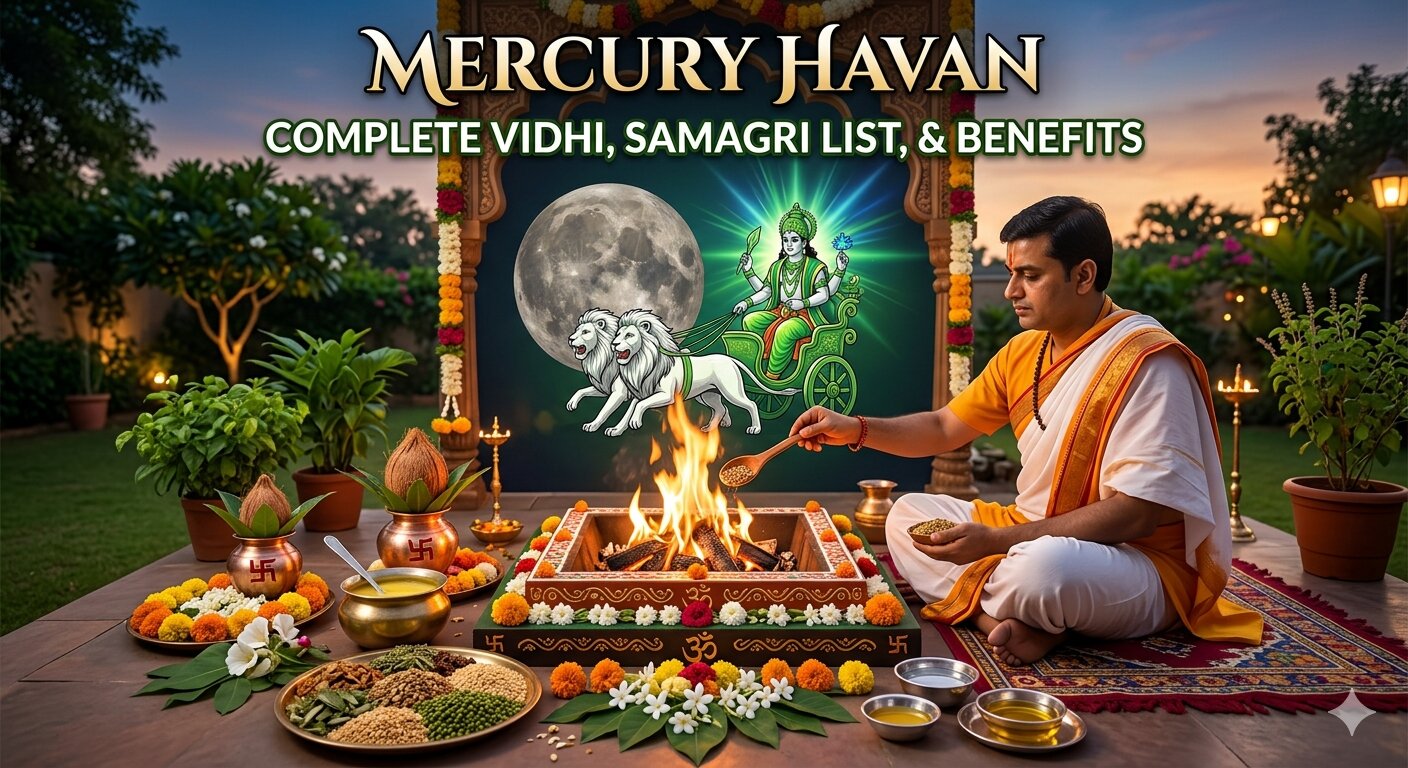
Quick Answer: How Do I Activate a Yantra at Home Through Pran Pratishtha? How do I activate a yantra at home through Pran Pratishtha? Yantra activation - known as Pran Pratishtha - is a sacred Vedic ritual that infuses a geometric instrument with divine life force (prana), transforming it from an inert object into a living conduit of cosmic energy. The process involves ten steps: purifying yourself with a shower and clean clothes; bathing the yantra in Panchamrit (milk, curd, honey, ghee, and sugar); drying it with a clean cloth; applying sandalwood paste or kumkum; placing it on your altar facing East or North; lighting a ghee lamp and incense; offering fresh flowers; chanting the deity-specific mantra 108 times; performing aarti; and committing to daily maintenance. A yantra that falls, comes into contact with impurity, or is neglected loses its activated state and must be re-consecrated. Yantra Pran Pratishtha ki vidhi kya hai? Yantra ko jagrit karne ki vidhi mein 10 charan hote hain: snan karke shudh vastra pahanna, yantra ko Panchamrit se abhishek karna (dudh, dahi, shahad, ghee, shakkar), saaf kapde se ponchna, chandan ya kumkum lagana, vedhi par purva ya uttar disha mein sthaapit karna, ghee ka deepak aur dhoop jalaana, pushp arpan karna, devta-vishesh mantra ka 108 baar jaap karna, aarti karna, aur pratideen seva-pooja karte rehna. Kisi bhi ashuddhata se yantra ki shakti nishthey ho jaati hai aur dubara pran pratishtha zaroori ho jaati hai. |
In the Vedic and Tantric traditions, a yantra is far more than a decorative diagram. The word yantra (yantr - 'instrument' or 'machine') refers to a precise geometric instrument that encodes the vibrational signature of a specific deity or cosmic principle. A Sri Yantra encodes the energy of Goddess Lakshmi-Tripura Sundari. A Kuber Yantra embodies the consciousness of the Lord of Wealth. A Navagraha Yantra holds the combined intelligence of the nine planetary forces. But none of these yantras function as intended until they undergo Pran Pratishtha - the ancient rite of infusing life force (prana) into the instrument.
Without Pran Pratishtha, a yantra is analogous to a telephone with no connection: exquisitely designed, but unable to transmit. After correct activation, it becomes a tuned receiver and transmitter of the divine energy it represents - supporting the intentions, practices, and wellbeing of the household or individual it serves.
This guide covers the complete Pran Pratishtha Vidhi applicable to all yantras - including the Sri Yantra, Kuber Yantra, Mahamrityunjaya Yantra, Kaal Sarp Dosh Yantra, Navagraha Yantra, and others. It also addresses what invalidates activation and how to maintain the yantra's power long-term.
The Sanskrit compound Pran Pratishtha (prana = life force; pratishtha = establishment or installation) refers to the formal consecration ceremony in which a sacred object - a deity idol, yantra, or ritual instrument - is invited to become a living abode of divine consciousness. The same ritual is performed in temples across India when a new murti is installed, and the principle is identical for yantras.
Tantric and Agamic scriptures, including the Mantra Mahodadhi, the Tantrasara, and the Sharada Tilaka Tantra, consistently establish that a yantra without Pran Pratishtha is merely a diagram - geometrically meaningful, but spiritually inert. The ritual is the bridge between the symbol and the living reality it represents.
The process works through several interlocking mechanisms recognised in the Vedic worldview:
| Classical Note: The rite of Pran Pratishtha is described in the Agama Shastra tradition, particularly in the Kamikagama, Karanagama, and Suprabhedagama. While the Pran Pratishtha performed in a home setting is a simplified form of the elaborate temple consecration ceremonies that may span multiple days, the core elements - mantra, sankalpa, abhishek, and aarti - are consistent across traditions. When in doubt, seek guidance from a qualified pandit who can supervise the rite for high-value or complex yantras such as the Sri Yantra or Shree Yantra. |
The material of the yantra matters. Classical texts recommend, in order of preference:
Before the Pran Pratishtha ritual, ensure:
The following sequence represents the standard Griha Pran Pratishtha Vidhi - the home consecration protocol consistent with mainstream Vedic and Tantric practice. Each step serves a distinct function in the activation process.
Materials Required Panchamrit ingredients: full-fat cow's milk, fresh curd, pure honey, cow's ghee, raw cane sugar (khand or mishri) Sandalwood paste (chandan) or kumkum (vermilion) Fresh flowers (preferably lotus, jasmine, or marigold) Ghee lamp (clay diya preferred) and pure cow's ghee Agarbatti (incense sticks) - sandalwood, rose, or camphor A clean copper or silver plate (thali) as the worship base Gangajal (Ganges water) or clean filtered water for final rinse A clean white or yellow silk or cotton cloth for drying |
Take a full bath before the ritual. Wear fresh, clean clothes - yellow or white are auspicious. Ensure you are in a calm mental state. Avoid performing the ritual after consuming meat, alcohol, or during a state of grief or anger. If you are a woman, do not perform Pran Pratishtha during menstruation - this is a classical restriction related to the energetic sensitivity of both the yantra and the subtle body during this period.
Place the yantra on a clean thali. Prepare Panchamrit by combining the five sacred substances in a small bowl in this order: cow's milk, fresh curd, pure honey, cow's ghee, and raw sugar. Mix gently. Pour the Panchamrit slowly over the yantra, beginning from the centre outward. As you do so, mentally or verbally recite:
Panchamrit Abhishek Mantra (recite during pouring): Om Apavitrah Pavitro Va Sarvaavastham Gatopi Va | Yah Smaret Pundarikaksham Sa Bahyabhyantarah Shuchih || (Translation: Whether impure or pure, in all states, one who remembers the lotus-eyed Lord becomes purified inside and out.) |
After the Panchamrit abhishek, gently rinse the yantra with clean Gangajal or filtered water to remove any stickiness from the honey or ghee. Pat dry carefully with a clean, unused white or yellow cloth. Do not use a rough cloth or paper - the surface of metal yantras can be scratched. Allow to air-dry for a few minutes if needed.
Using your ring finger, apply a small mark of sandalwood paste (chandan) at the very centre of the yantra - the bindu point, which is the geometric nucleus of the entire design. For Shakti yantras and Devi yantras, use kumkum (vermilion) instead. For Shiva or Navagraha yantras, chandan is preferred. The bindu represents the point of concentrated divine presence - anointing it is a symbolic invitation for the deity's consciousness to take residence.
Place the yantra on your home altar (puja sthana) on a clean cloth or wooden base. The yantra should face East or North - East is associated with sunrise and new beginnings (ideal for Surya, Lakshmi, and Saraswati yantras); North is the direction of Kubera and material abundance (ideal for Kuber and Vastu yantras). Ensure the altar is elevated above floor level. The yantra should not be placed directly on the ground.
Light a ghee lamp (diya) to the right of the yantra and incense (agarbatti) to the left. The ghee lamp represents Agni Tattva - the fire element that purifies the space and acts as a divine witness to the ritual. The incense purifies the air element and carries prayer upward. Allow both to remain lit throughout the puja.
Offer fresh flowers - lotus, jasmine, or marigold are most auspicious - at the base of the yantra and if possible at the bindu. In Tantric tradition, flowers are considered a form of the divine feminine (Shakti) and their offering nourishes the receptive aspect of the yantra's consciousness. Avoid using artificial or dried flowers for Pran Pratishtha.
This is the most essential step of Pran Pratishtha. Seat yourself comfortably before the yantra in a cross-legged position. Using a rudraksha or crystal mala, chant the presiding deity's beej mantra or mool mantra 108 times. As you chant, hold the intention (sankalpa) that the divine energy of the deity is being invited to fully inhabit the yantra before you. Maintain a steady pace - neither too fast nor too slow. Refer to the Deity-Specific Mantras section below for the correct mantra for your yantra.
After completing 108 repetitions of the mantra, perform aarti - the circular waving of the ghee lamp before the yantra in a clockwise direction, seven times. As you perform aarti, you may sing or recite any devotional prayer or simply hold the intention of gratitude. Aarti marks the conclusion of the formal invocation and seals the activation.
Pran Pratishtha is not a one-time event that operates indefinitely without renewal. A yantra requires daily care to maintain its activated state. Each morning, wipe the yantra with a clean dry cloth, re-offer a fresh flower or a few drops of water, and chant the deity's mantra at least 11 times. On special occasions - full moon (Purnima), new moon (Amavasya), and deity-specific festival days - perform a brief repeat of the Panchamrit abhishek and a full 108-repetition chanting.
The following table provides the activation mantras for the most commonly used yantras. Each mantra should be chanted 108 times during Step 8 of the Pran Pratishtha Vidhi.
| Yantra | Presiding Deity | Activation Mantra (108x) |
| Sri Yantra / Shree Yantra | Goddess Tripura Sundari / Mahalakshmi | Om Shreem Hreem Shreem Kamale Kamalalaye Praseed Praseed Shreem Hreem Shreem Om Mahalaxmaye Namah |
| Kuber Yantra | Lord Kubera (God of Wealth) | Om Shreem Hreem Kleem Shreem Kleem Vitteshvaraya Namah |
| Mahamrityunjaya Yantra | Lord Shiva (Mrityu-Vijaya aspect) | Om Tryambakam Yajamahe Sugandhim Pushtivardhanam | Urvarukamiva Bandhanan Mrityor Mukshiya Maamritat |
| Kaal Sarp Dosh Yantra | Lord Shiva / Rahu-Ketu Axis | Om Namah Shivaya (1,008x) + Om Raam Rahave Namah (108x) |
| Surya Yantra | Lord Surya (Sun) | Om Hraam Hreem Hraum Sah Suryaya Namah |
| Navagraha Yantra | Nine Planetary Deities | Om Navagraha Devtabhyo Namah (combined); individual planet mantras 9x each |
| Baglamukhi Yantra | Goddess Baglamukhi | Om Hleem Baglamukhi Sarvadushtanam Vaacham Mukham Padam Stambhaya Jivham Kilaya Buddhi Vinashaya Hleem Om Swaha |
| Saraswati Yantra | Goddess Saraswati | Om Aim Saraswatyai Namah |
| Ganesh Yantra | Lord Ganesha | Om Gam Ganapataye Namah |
Note: The Kaal Sarp Dosh Yantra works best in conjunction with the Kaal Sarp Shanti Puja at Trimbakeshwar and the full Rahu-Ketu remediation protocol. See the [Complete Guide to Kaal Sarp Dosh: 12 Types and Proven Remedies] for the complete remediation system.
The Vedic and Tantric traditions are precise about the conditions under which an activated yantra loses its consecrated state and must be re-energised through Pran Pratishtha. These conditions fall into three categories:
| Re-activation Protocol: If any of the above conditions occur, the re-activation follows the same 10-step process as the original Pran Pratishtha. No separate or more elaborate ritual is required unless the yantra has been physically damaged. In cases of severe desecration, consult a qualified pandit for a supervised Shuddhi (purification) ceremony before re-energising. |
Are you currently struggling with life phases like Astrology? Discover your precise chart insights now.
An activated yantra thrives on consistent devotional attention. The following daily and weekly practices sustain and progressively strengthen its activated state:
| Practice | Frequency and Method |
| Mantra chanting | Minimum 11 repetitions of the deity's mantra every morning before leaving the altar |
| Wiping with clean cloth | Daily - use a fresh, clean cloth; never a cloth used for other household purposes |
| Ghee lamp lighting | Daily - even a small diya lit for a few minutes sustains the fire element of the activation |
| Fresh flower or tulsi offering | Daily or as often as possible; remove wilted flowers immediately |
| Panchamrit abhishek | Monthly on Purnima (full moon); also on the deity's specific festival days |
| Full 108-mantra repetition | Weekly - ideally on the yantra's presiding deity's sacred day (e.g., Friday for Lakshmi, Monday for Shiva, Wednesday for Ganesh) |
| Incense offering | At least once daily - sandalwood or rose for most yantras; camphor for Shiva and Kali yantras |
For detailed information on specific yantra types, their placements, and benefits, refer to the following articles on Nakshatraai.ai:
For personal-use yantras of moderate importance - such as a Kuber Yantra for home prosperity or a Surya Yantra for health - the 10-step Griha Pran Pratishtha Vidhi described here is sufficient when performed with sincerity and correct procedure. For high-value or complex yantras - particularly the Sri Yantra, Shree Yantra, and Kaal Sarp Dosh Yantra - or for yantras intended for a business or commercial space, it is strongly advisable to have the Pran Pratishtha supervised or performed by a qualified pandit trained in Tantra Vidhi.
The most auspicious window is Brahma Muhurta - the 48-minute period approximately 1.5 hours before sunrise. This is the period when the atmosphere carries the highest concentration of sattvic energy, making mantra and ritual most effective. If Brahma Muhurta is not accessible, early morning between sunrise and 8:00 AM is acceptable. Avoid performing Pran Pratishtha during Rahu Kaal (an inauspicious daily period of approximately 90 minutes) and during solar or lunar eclipses.
Yes, but each yantra requires its own complete 10-step sequence. You may perform the shared steps (self-purification, altar preparation, ghee lamp lighting) once and then cycle through each yantra for the mantra-chanting and aarti steps individually. Do not mix mantras or perform a single aarti for all yantras simultaneously, as this reduces the specificity of the activation.
When properly maintained through daily practice, a Pran Pratishtha endures indefinitely. The activation is renewed and strengthened by consistent mantra chanting, daily care, and periodic Panchamrit abhishek. An unmaintained yantra gradually loses its energised state over 40 days to six months depending on the strength of the original activation and the quality of the yantra's material.
Certain yantras are appropriate for the bedroom - particularly the Mahalakshmi Yantra (placed in the North-East corner of the bedroom) and the Saraswati Yantra (for students). However, yantras associated with intense energies - Kali Yantra, Baglamukhi Yantra, and certain Tantric yantras - are better kept in a dedicated puja room. In general, ensure that any yantra kept in a bedroom is covered with a clean cloth during sleep and is not exposed to sexual activity.
The Pran Pratishtha process is identical regardless of the metal. However, a gold yantra is considered to hold higher conductivity for subtle energy and may require fewer mantra repetitions to activate - some traditions prescribe 21 or 51 repetitions for gold yantras versus 108 for copper. When in doubt, always complete 108 repetitions as a conservative practice.
A yantra, when properly consecrated through Pran Pratishtha, is one of the most elegant technologies in the Vedic tradition - a geometric key that unlocks a specific frequency of divine energy and anchors it within your living or working space. The 10-step activation ritual described in this guide is the same protocol used by qualified pandits for personal yantras, distilled from the Tantric and Agamic scriptures into a form accessible to sincere home practitioners.
The most important elements are not elaborate materials or expensive instruments, but sincerity of intention, correct mantra pronunciation, and consistency of daily practice. A copper yantra activated with genuine devotion and maintained with daily care will outperform a gold yantra that is activated once and then neglected.
Whether you are working with a Sri Yantra for abundance, a Kaal Sarp Dosh Yantra for karmic resolution (see [Complete Guide to Kaal Sarp Dosh]), or a Mahamrityunjaya Yantra for protection and healing - the Pran Pratishtha Vidhi is your bridge between the symbol and the living reality it represents. Begin with preparation, proceed with devotion, and sustain with discipline. The yantra will do the rest.
Connect with a Jyotishi on Nakshatraai.ai Generate your Kundali and check for yantra recommendations based on your birth chart: nakshatraai.ai/add-kundli Speak with an expert Jyotishi for a personalised yantra recommendation and Pran Pratishtha guidance: nakshatraai.ai/astrologer |
Disclaimer: This article is for educational and informational purposes only. Ritual procedures should ideally be performed under the guidance of a qualified pandit, particularly for high-value yantras or those intended for specific remedial purposes. Astrological guidance does not substitute for consultation with a qualified Jyotishi or Hindu priest who can evaluate your specific birth chart and circumstances.