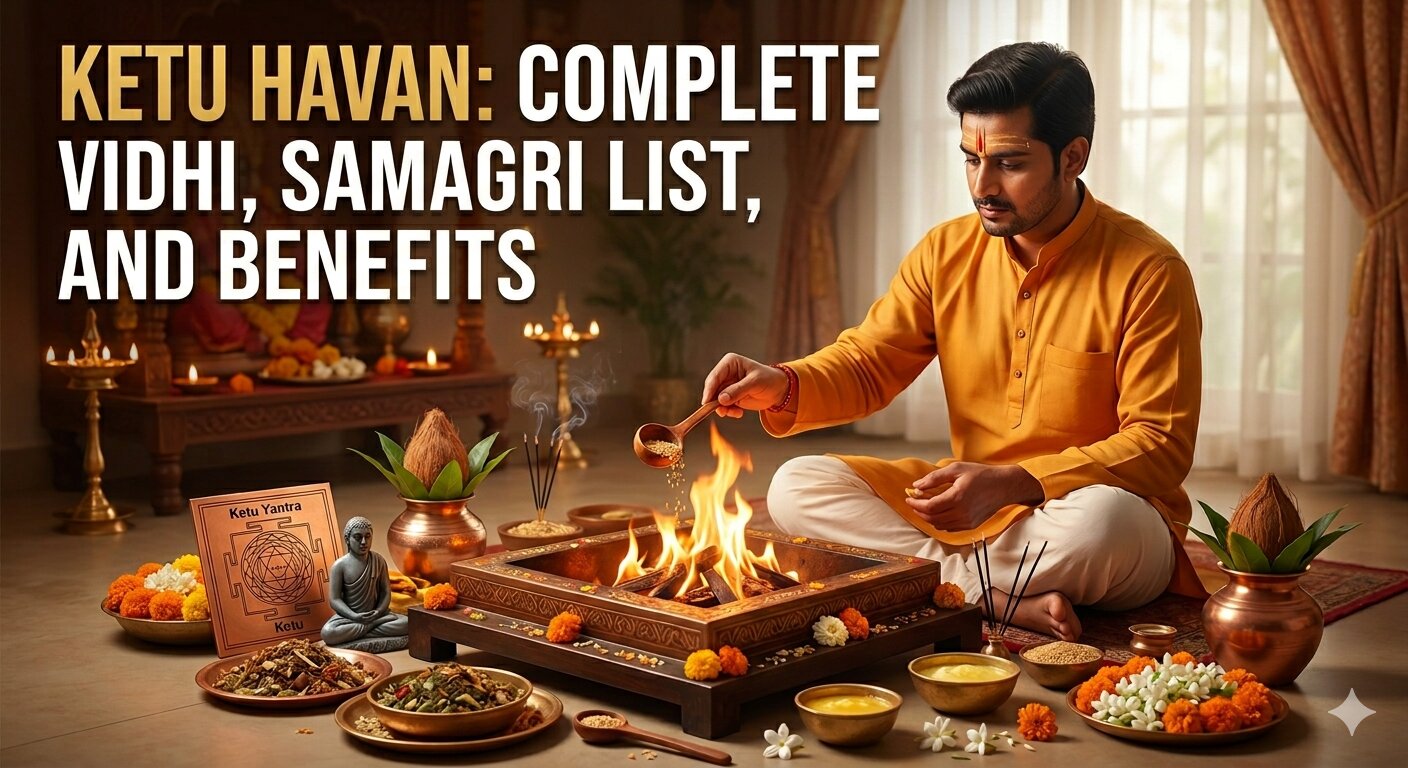
To perform Havan for Ketu, conduct it on Tuesday or Saturday during the waning moon. Use kusha grass, sesame seeds, and blanket flower in the sacred fire. Chant "Om Sraam Sreem Sraum Sah Ketave Namah" 108 times while offering samagri. Wear grey or brown clothes. This ritual removes karmic obstacles, spiritual confusion, and sudden losses.
Ketu ki Havan Tuesday ya Saturday ko Krishna Paksha mein karein. Havan kund mein til, kusha, aur dhoop daalen. "Om Ketave Namah" mantra ka 108 baar jaap karein. Yeh puja moksha praapti, karmic badhaaon ko door karne, aur adhyatmik shanti ke liye karein.
Ketu Havan is performed during specific astrological conditions that cause spiritual confusion, sudden losses, and karmic obstacles. This sacred fire ritual is especially needed during Ketu Mahadasha or Antardasha when unexpected events disrupt life. When Ketu is debilitated in Taurus or afflicted by malefic planets, this Havan removes negative influences. During Ketu's adverse transits through the 1st, 4th, 7th, or 10th house, or when experiencing vivid dreams, ancestral disturbances, and lack of clarity in spiritual matters, performing Ketu Havan brings divine grace and karmic resolution.
Ketu Havan delivers profound spiritual and material benefits aligned with Ketu's domain over moksha, past-life karma, and hidden knowledge. It removes karmic debts accumulated from previous births and clears ancestral dosha affecting family lineage. The ritual enhances spiritual intuition, meditation depth, and connection with divine wisdom. It protects against sudden accidents, unexpected losses, and mysterious illnesses that have no clear diagnosis. Ketu Havan resolves Pitra Dosha, eliminates negative psychic influences, and removes obstacles in foreign travel and settlement. It brings mental peace by clearing confusion, obsessive thoughts, and irrational fears. The Havan is particularly effective for those pursuing research, occult sciences, astrology, and moksha-oriented spiritual practices.
Murti ya Yantra: Ketu Yantra engraved on copper or silver plate, or image of Lord Ganesha (Ketu's presiding deity)
Phool (Flowers): Grey or multi-colored flowers, particularly blanket flowers (Gaillardia), black or deep purple flowers, kusha grass flowers
Dhoop aur Agarbatti (Incense): Loban (benzoin resin), guggul dhoop, camphor, sandalwood-based incense
Diya (Lamp): Mustard oil lamp in iron or earthen diya; alternatively, ghee lamp
Naivedya (Food Offering): Black sesame laddoos, millet khichdi, urad dal preparations, black chickpeas, grey-colored sweets
Kapda ka Rang (Cloth Colour): Grey, brown, smoke-colored, or multi-colored cloth for deity covering
Vishesh Samagri (Special Items):
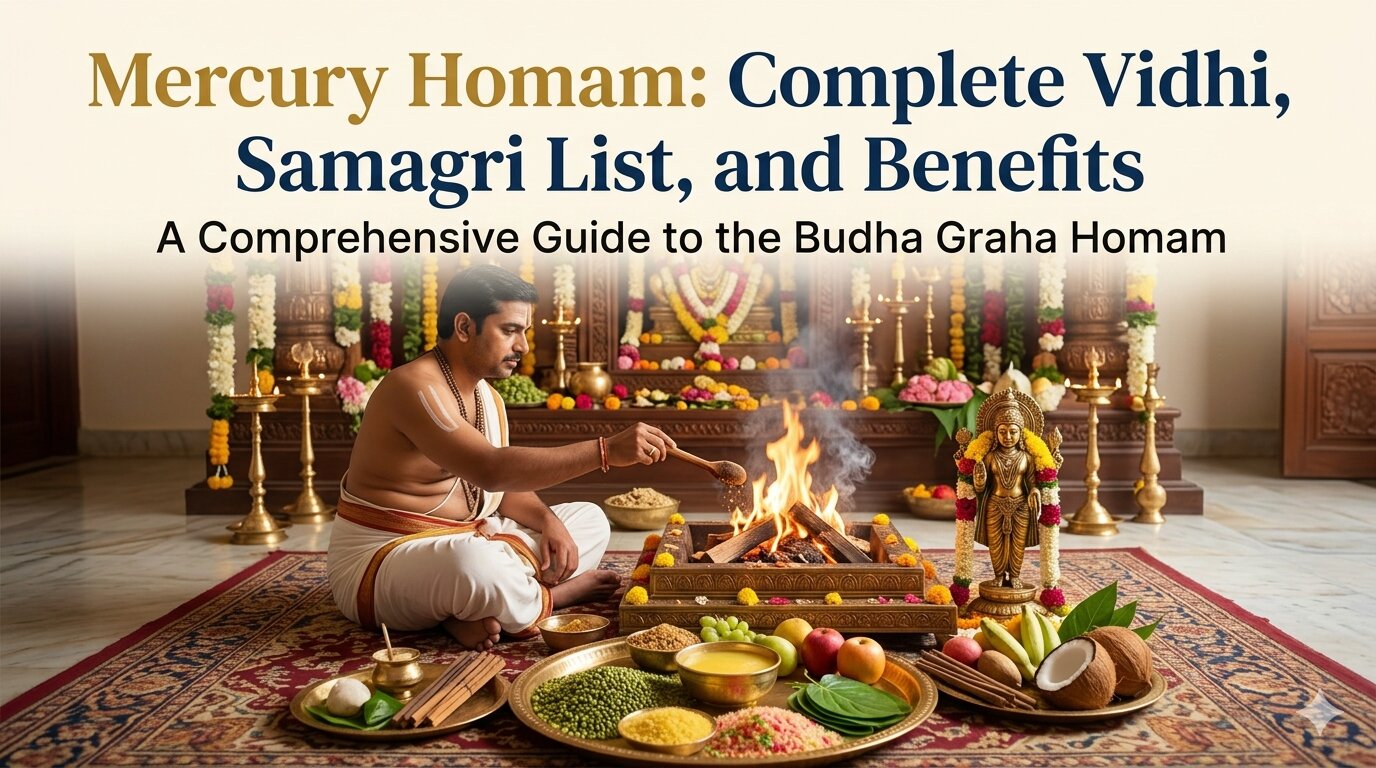
Step 1: Taiyaari (Preparation/Shuddhi) Take bath before sunrise. Wear fresh grey, brown, or white clothes. Clean the Havan space thoroughly. Place the Havan Kund facing South-West direction (Ketu's direction). Sprinkle Gangajal around the space while chanting "Om Apavitraḥ Pavitro Vā." Purify all samagri items by showing them incense smoke.
Step 2: Sankalp (Intention Setting) Sit facing South-West direction. Hold flowers, rice, and water in joined palms. State your full name, gotra, current tithi, nakshatra, and specific intention: "Ketu graha shanti hetu, karmic doshaon ke nivaran hetu yeh Havan karma karishye." Release the sankalp items at the altar base.
Step 3: Avahana (Invocation) Light the Havan Kund with camphor and ghee-soaked cotton wick. Invoke Lord Ganesha first: "Om Ganapataye Namah." Then invoke Ketu: "Om Ketave Namah, Aagaccha Aagaccha, Sthapaya Sthapaya." Visualize Ketu as a serpent-tailed deity riding a vulture, holding a mace and blessing mudra.
Step 4: Agni Sthapana (Establishing Sacred Fire) Place mango wood or peepal wood in the Havan Kund. Pour ghee while chanting "Om Bhur Bhuvah Swaha." Once fire is established, offer kusha grass and sandalwood pieces. The fire should burn steadily before beginning main offerings.
Step 5: Mukhya Havan (Main Offerings) Offer the following items into the fire with ghee while chanting Ketu mantras:
After each offering, say "Swaha" and surrender the item completely into flames.
Step 6: Mantra Jaap Chant the Ketu Beej Mantra 108 times using rudraksha mala: "Om Sraam Sreem Sraum Sah Ketave Namah." Keep right hand in Gyan Mudra (thumb touching index finger). Offer one sesame seed with ghee into fire after every 10 mantras.
Step 7: Purnahuti (Final Offering) Prepare poornahuti mixture: whole coconut halves filled with rice, sesame, turmeric, sandalwood paste, and flowers, soaked in ghee. Offer this while chanting the Ketu Gayatri 3 times. Let the fire consume completely.
Step 8: Aarti aur Samapti (Closing) Perform aarti with camphor in clockwise direction. Chant "Om Jai Ketu Devaya Namah" 7 times. Circumambulate the Havan Kund clockwise 3 times. Take the sacred ash (vibhuti) and apply on forehead. Offer pranaam and request forgiveness for any ritual errors.
Step 9: Prasad Vitran Distribute black sesame laddoos or millet preparations as prasad among family members. Keep some Havan ash safely for applying daily on forehead for 40 days post-Havan.
1. Beej Mantra (Most Powerful): "Om Sraam Sreem Sraum Sah Ketave Namah" ॐ स्रां स्रीं स्रौं सः केतवे नमः Count: 108 times or 7,000 times for major doshas Best chanted during Abhijit Muhurta or early morning
2. Vedic Mantra (Classical Navagraha Stotra): "Palasha Pushpa Sankasham Taraka Graha Mastakam | Roudram Roudratmakam Ghoram Tam Ketum Pranamamy Aham ||" पलाश पुष्प सङ्काशं तारकाग्रह मस्तकम् | रौद्रं रौद्रात्मकं घोरं तं केतुं प्रणमाम्यहम् || Count: 27 times daily Meaning: I bow to Ketu, who resembles a palasha flower, who is the head of stars, fierce and of Rudra's nature
3. Saral Mantra (Simple): "Om Ketave Namah" ॐ केतवे नमः Count: 108 times minimum Ideal for beginners and daily practice
Jaap Guidelines: Use 7-mukhi or 9-mukhi rudraksha mala. Sit in Padmasana or Sukhasana facing South-West. Maintain mental focus on karmic purification and spiritual liberation.
Are you currently struggling with life phases like Astrology? Discover your precise chart insights now.
Sabse Shubh Din (Best Day): Tuesday (Mangalvaar) is most auspicious as Mars is Ketu's friend. Saturday (Shanivaar) is also highly beneficial as both are shadow planets sharing karmic themes. Ketu's own day is considered Tuesday in traditional texts.
Shubh Nakshatra: Ashwini and Magha Nakshatras are ruled by Ketu and are most powerful. Moola Nakshatra is also excellent as it connects to Ketu's transformative energy.
Tithi: Krishna Paksha (waning moon) tithis are preferred, especially Ashtami (8th day). Amavasya (new moon) is particularly powerful for Ketu remedies and ancestral work.
Samay (Time of Day): Ideal time is Rahu Kaal on Tuesday or Saturday, or during Brahma Muhurta (90 minutes before sunrise). Evening sandhya time (sunset) is also suitable for Ketu worship.
Kab Na Karein (Avoid): Avoid Shukla Paksha Purnima (full moon). Don't perform during your own birthday nakshatra. Avoid Thursday (Jupiter's day conflicts with Ketu's nature). Skip days when you're emotionally disturbed or angry.
Q1: What is the main difference between Ketu Havan and simple Ketu puja?
A1: Ketu Havan involves Agni (sacred fire) as the medium to carry offerings to the deity, making it more powerful than simple puja. Havan requires specific samagri like sesame seeds, kusha grass, and ghee to be offered into flames with Vedic mantras. Simple puja involves offering flowers, incense, and naivedya to an idol or yantra without fire. Havan generates transformative energy through fire element, producing immediate karmic cleansing effects that regular puja builds gradually over time.
Q2: Ketu ki Havan ghar par kar sakte hain ya pandit zaruri hai?
A2: Ketu ki Havan aap ghar par bhi kar sakte hain agar aapko basic Vedic vidhi ka gyaan hai. Chote havan kund ka upyog karein aur safety ka dhyan rakhein. Lekin agar major Ketu Mahadasha chal raha hai ya bahut serious problems hain, toh experienced pandit se karwana zyada effective hota hai. Pandit Sanskrit ucchaaran aur Vedic procedures ko sahi tarike se follow karte hain jo results ko powerful banata hai.
Q3: How long does it take to see results from Ketu Havan?
A3: Initial spiritual peace and mental clarity often appear within 7-10 days of Ketu Havan. Significant karmic relief and resolution of major obstacles typically manifest within 40 days. For deep-rooted ancestral doshas or Mahadasha afflictions, continue monthly Havans for 3-6 months for complete transformation. The subtle nature of Ketu means results appear through synchronicities, intuitive insights, and gradual dissolution of problems rather than dramatic overnight changes.
Q4: Ketu ki puja mein kya galti nahi karni chahiye?
A4: Ketu Havan mein yeh galtiyan avoid karein: red ya bright colors ka upyog (Ketu grey aur subtle rang prefer karta hai). North direction mein baithna (hamesha South-West facing karein). Garlic, onion jaise tamasic foods ka use. Shukla Paksha Purnima ko puja karna. Fire safety ignore karna - proper Havan Kund ka use zaruri hai. Mantra mein galat ucchaaran. Sankalp ke bina shuru karna. Puja ke turant baad non-veg ya alcohol consume karna.
Q5: Can Ketu Havan help with sudden financial losses and career instability?
A5: Yes, Ketu Havan is specifically effective for sudden, unexpected losses and career confusion caused by Ketu's unpredictable nature. When Ketu afflicts the 2nd house (wealth), 10th house (career), or is placed in malefic positions, this Havan removes karmic blocks causing financial drainage. It's particularly helpful for those facing inexplicable business failures, investment losses, or career direction confusion. However, combine the Havan with practical financial discipline and career counseling for holistic results. The ritual clears energetic obstacles while you take grounded action.