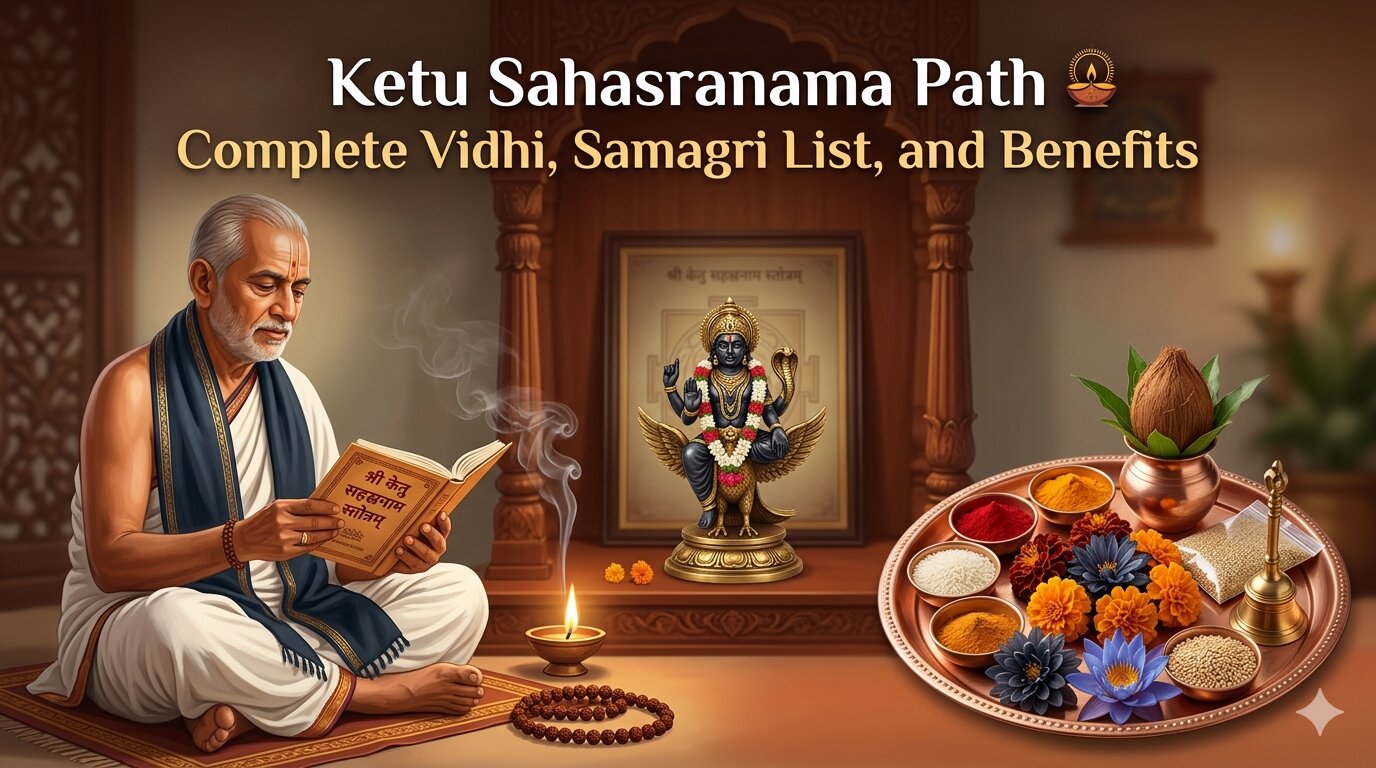
To perform Sahasranama Path for Ketu, choose Tuesday or Saturday during Ashwini or Magha Nakshatra. Recite Ketu's thousand names from the Graha Sahasranama text. Offer grey or multicolored flowers, sesame seeds, blankets, and kusha grass. Light incense with guggul and camphor. Chant "Om Kem Ketave Namaha" 108 times. This path removes spiritual obstacles, grants moksha, and neutralizes Ketu's malefic effects during its Mahadasha or adverse transits.
Ketu ki Sahasranama Path ke liye Tuesday ya Saturday ko Ashwini nakshatra mein karein. Dhoop-kala phool, til, aur kusha grass chadhayen. "Om Kem Ketave Namaha" ka 108 baar jaap karein. Yeh puja Ketu Mahadasha ke dosh, adhyatmik badhaon, aur grahan rog ke liye karein. Guggul ki dhoop zaroor jalayein.
Ketu Sahasranama Path is essential when you're undergoing Ketu Mahadasha or Antardasha, experiencing unexplained health issues or spiritual confusion. This puja is particularly needed when Ketu is debilitated in Taurus, afflicted in the 1st, 4th, 7th, or 10th house, or causing Kaal Sarpa Dosha. If you face recurring obstacles in spiritual practice, sudden losses, or skin ailments without medical explanation, this Sahasranama Path appeases Ketu and channels its transformative energy positively.
Ketu Sahasranama Path directly addresses the shadowy planet's core domains. It removes ancestral karmic burdens (pitru dosha) that block progress across generations. This path enhances spiritual awakening, meditation depth, and intuitive abilities- Ketu's primary gifts. It provides relief from chronic skin diseases, allergies, and mysterious ailments that conventional medicine cannot diagnose. The recitation neutralizes sudden accidents, injuries, and unexplained fears. For those seeking moksha or sannyasa, it accelerates detachment and spiritual evolution. It also mitigates malefic effects during Ketu-Rahu transits causing Grahan Dosha. Business people facing sudden losses or partnership betrayals find stability through this powerful Sahasranama Path dedicated to the headless planet.
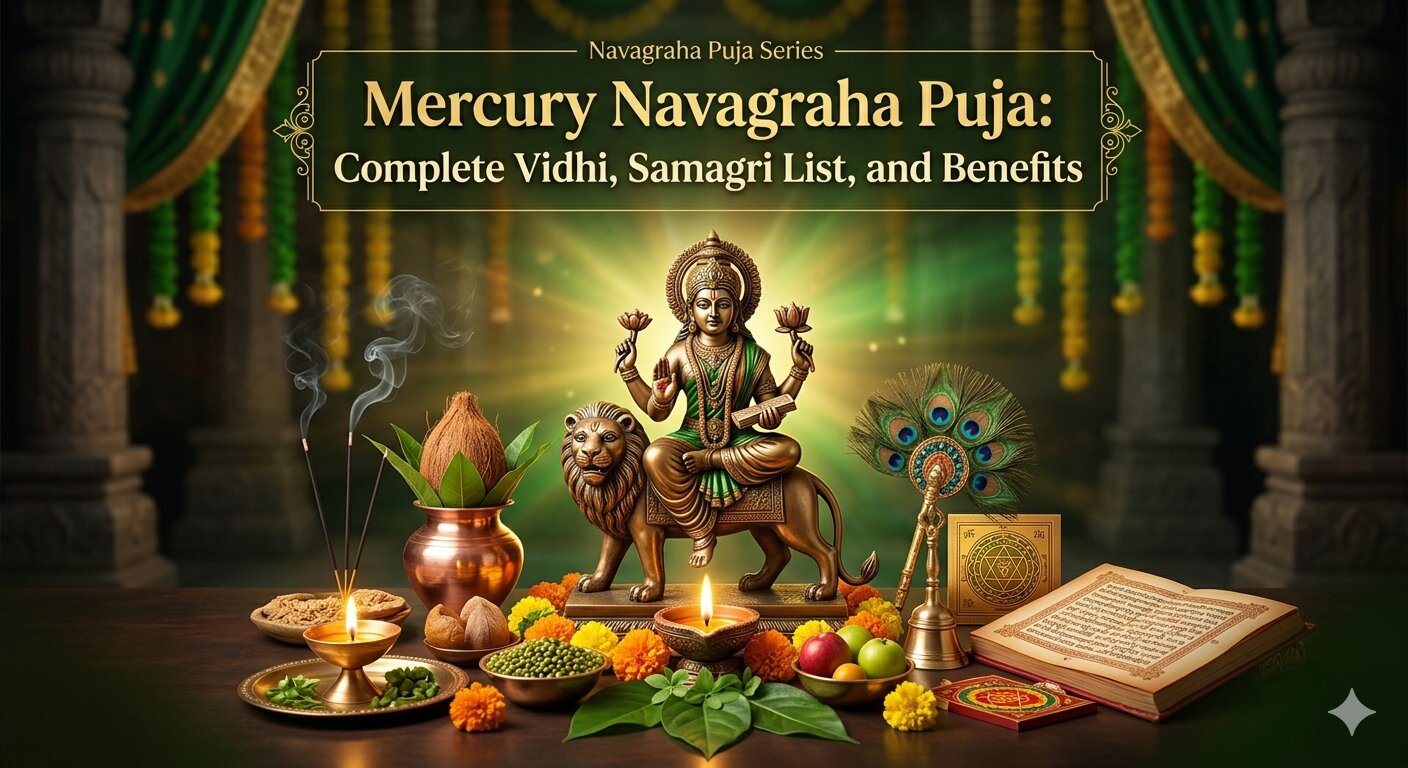
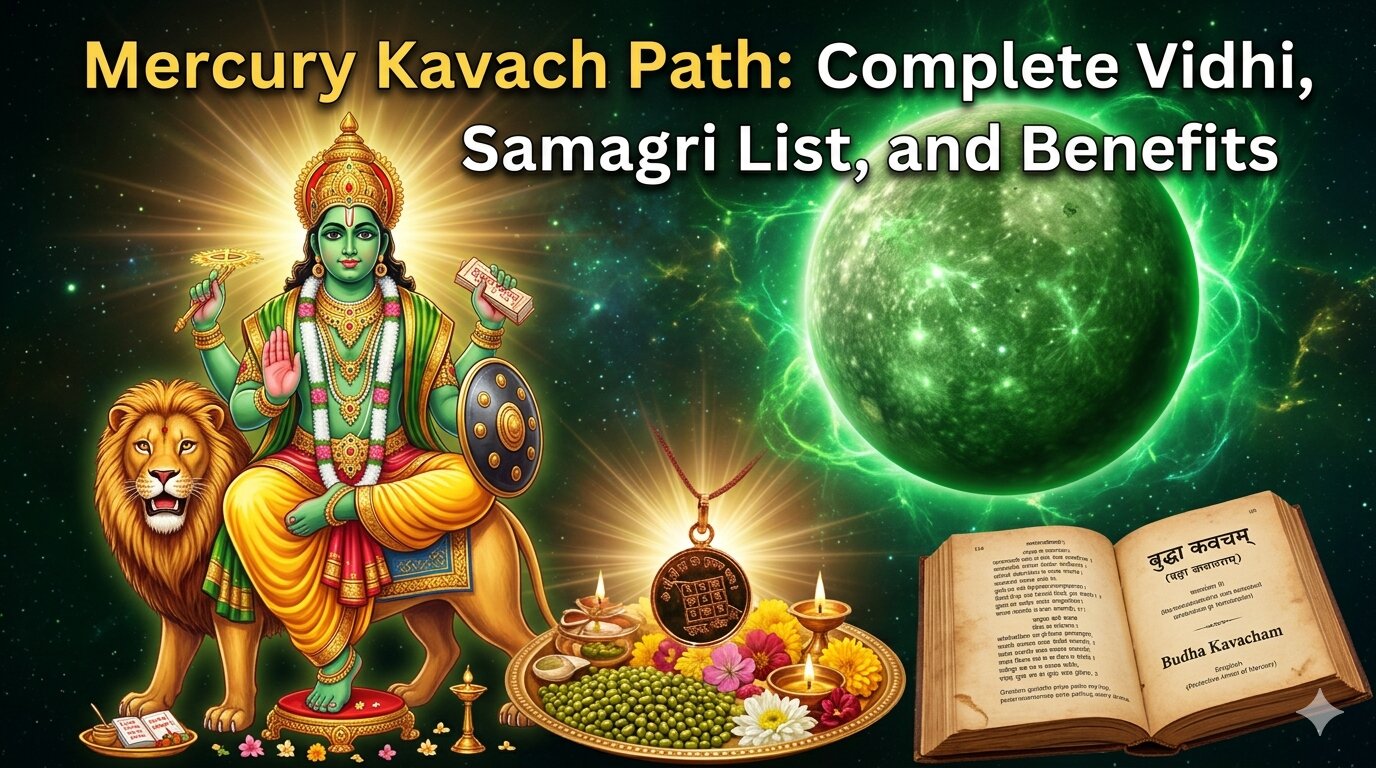
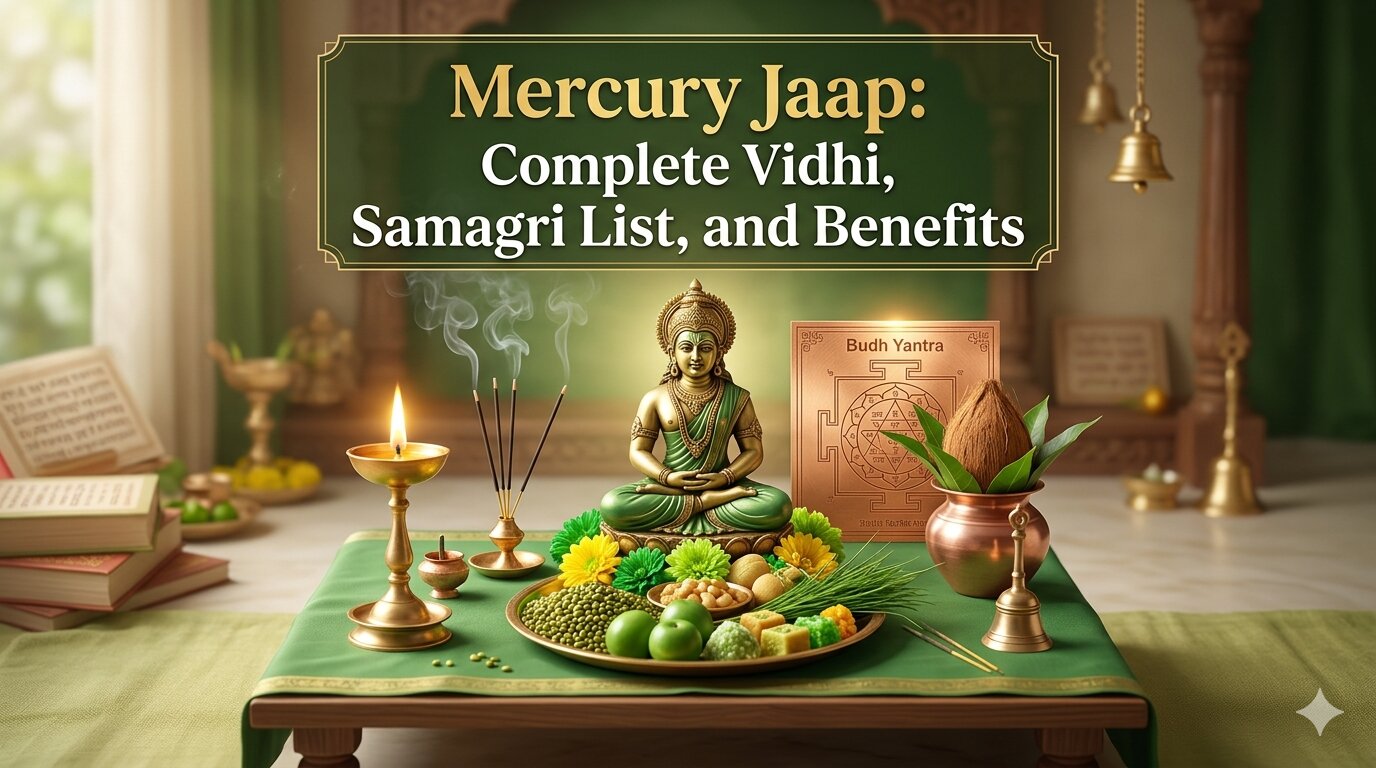
Murti ya Yantra: Ketu Yantra on copper or bhojpatra, or an image of Ganesha (Ketu's presiding deity)
Phool (Flowers): Grey, multicolored, or smoky-colored flowers; dharba grass, kusha grass
Dhoop aur Agarbatti (Incense): Guggul dhoop, camphor, or mixed fragrance agarbatti (not single-note scents)
Diya (Lamp): Mustard oil or sesame oil diya; ghee diya acceptable
Naivedya (Food Offering): Khichdi made with urad dal and rice, sesame laddoos, black til chikki
Kapda ka Rang (Cloth Colour): Grey, smoke-colored, or multicolored cloth
Vishesh Samagri (Special Items):
Step 1: Taiyaari (Preparation/Shuddhi) Bathe early morning and wear grey, brown, or white clothes. Clean the puja space thoroughly. Sprinkle Ganga jal or clean water mixed with a pinch of salt around the area. Lay a grey or brown aasan facing southwest direction (Ketu's direction).
Step 2: Sankalp Sit facing southwest. Hold akshat (rice mixed with turmeric) and flowers in your right palm. State your intention clearly: "Om, aaj [date, tithi], main [your name] Ketu Graha ki Sahasranama Path kar raha/rahi hoon apne [specific issue] ke nivaran ke liye." Release the akshat at the deity's feet.
Step 3: Avahana (Invocation) Place the Ketu Yantra or Ganesha image on a clean platform. Light the mustard oil diya on the left side. Invoke Ketu by chanting: "Om Palasha Pushpa Sankasham Taraka Graha Mastakam, Raudram Raudratmakam Ghoram Tam Ketum Pranamamy Aham." Ring the bell while invoking.
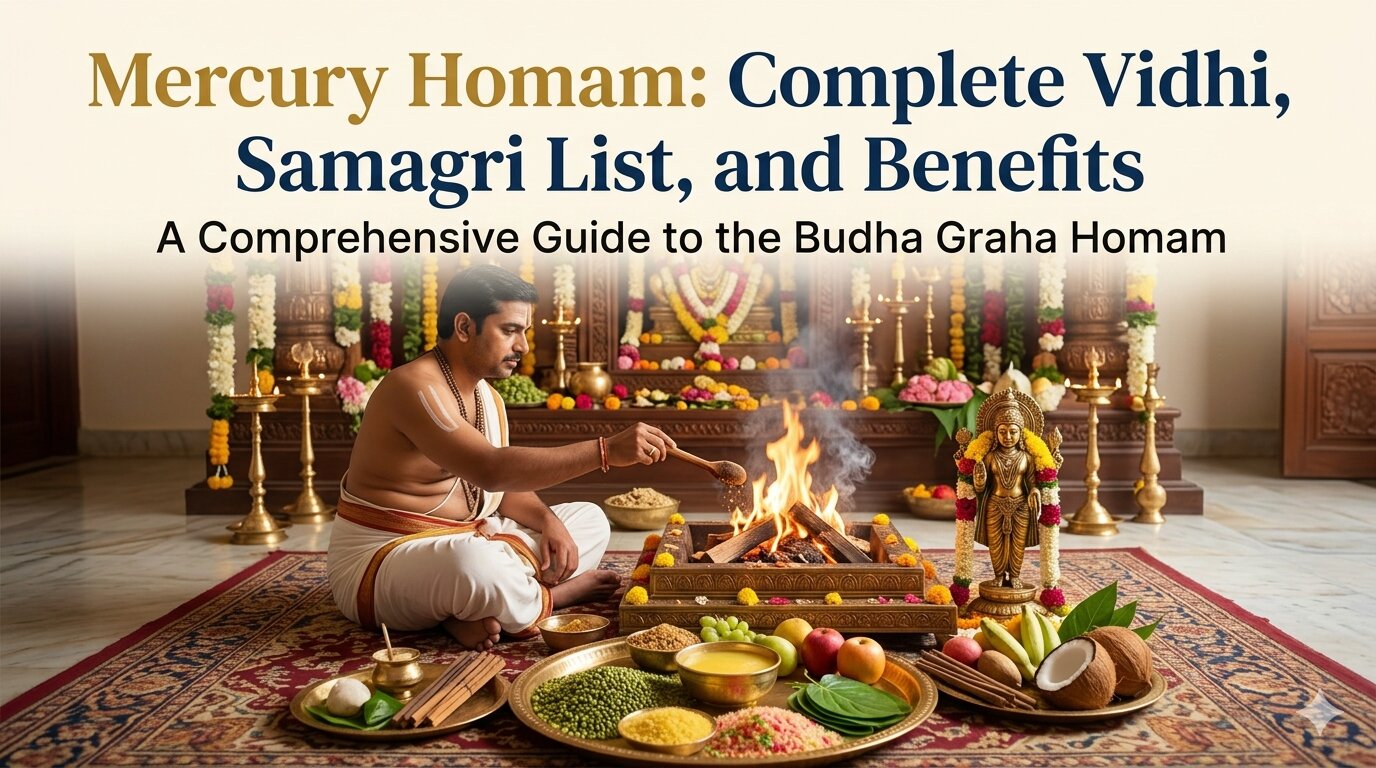
Step 4: Shodashopachar Puja Offer the 16 traditional services: aasan (seat - kusha grass), swagat (welcome), padya (water for feet), arghya (water for hands), achamana (water for sipping), snana (symbolic bath with water), vastra (grey cloth), yagyopaveet (sacred thread if you have), gandha (sandalwood paste mixed with ash), pushpa (grey flowers), dhoop (guggul incense), deep (mustard oil lamp), naivedya (khichdi offering), tambool (betel leaves), dakshina (iron coin), and aarti.
Step 5: Mukhya Bhog (Main Offering) Place the khichdi and sesame laddoos before the deity. Sprinkle water around the plate three times clockwise. Chant "Om Kem Ketave Namaha" three times while offering. Add camphor and guggul to the dhoop.
Step 6: Sahasranama Path Read or recite Ketu's 1000 names from the Graha Sahasranama Stotram. If the complete text is not available, recite "Om Kem Ketave Namaha" 1008 times with a rudraksha mala. Maintain focus on Ketu's liberating and spiritual qualities throughout.
Step 7: Mantra Jaap After the Sahasranama Path, chant the Ketu Beej Mantra "Om Sraam Sreem Sraum Sah Ketave Namaha" 108 times. Use a rosary made of rudraksha or tulsi beads.
Step 8: Aarti aur Samapti (Closing) Perform aarti with camphor or ghee lamp while singing Ketu aarti or general Graha aarti. Offer pushpanjali (final flowers). Do pradakshina mentally (Ketu worship typically doesn't involve physical circumambulation). Seek forgiveness for any errors: "Mantra heenam kriya heenam bhakti heenam Ketu, yat pujitam maya deva paripurnam tadastu te."
Step 9: Prasad Vitran Distribute the khichdi and sesame laddoos as prasad. Donate a grey or brown blanket, iron items, or sesame to a spiritual seeker or someone doing tapasya. Keep some prasad for yourself to consume.
1. Beej Mantra: "Om Sraam Sreem Sraum Sah Ketave Namaha" (ॐ स्रां स्रीं स्रौं सः केतवे नमः) Chant 108 times during the puja or 18,000 times over 40 days for maximum benefit.
2. Vedic Mantra: "Palasha Pushpa Sankasham Taraka Graha Mastakam Raudram Raudratmakam Ghoram Tam Ketum Pranamamy Aham" (पलाश पुष्प सङ्काशं तारकाग्रह मस्तकम्। रौद्रं रौद्रात्मकं घोरं तं केतुं प्रणमाम्यहम्॥) Recite 9, 27, or 108 times during Brahma muhurta or evening sandhya.
3. Saral Mantra (Simple): "Om Kem Ketave Namaha" (ॐ कें केतवे नमः) Ideal for beginners. Chant 108 times daily. Can be done anytime but best during Rahu Kaal on Tuesdays.
Best Practice: Sit in padmasana or sukhasana, keep spine straight, use Gyan mudra (thumb and index finger touching), and focus on the area between eyebrows (ajna chakra- Ketu's energy center).
Are you currently struggling with life phases like Astrology? Discover your precise chart insights now.
Sabse Shubh Din (Best Day): Tuesday (Mangalvar) sabse zyada powerful hai kyunki Ketu ko Mars jaisa mana jata hai. Saturday (Shanivar) bhi accha hai, kyunki dono shadow planets hain. Special occasions: Ashwini Nakshatra ka din, Solar or Lunar eclipse days (grahan kaal), aur Ketu jayanti.
Shubh Nakshatra: Ashwini Nakshatra (Ketu's own nakshatra) sabse shubh. Magha aur Mula nakshatra bhi bahut effective hain- teeno Ketu-ruled nakshatras.
Tithi: Krishna Paksha ki Ashtami (8th lunar day of waning moon) ideal hai. Chaturdashi bhi powerful. Amavasya (new moon) particularly effective for ancestral karma healing.
Samay (Time of Day): Suryast ke baad (after sunset) se raat 9 baje tak best. Alternatively, subah Rahu Kaal mein bhi kar sakte hain Tuesday ko. Evening sandhya (twilight) Ketu ke liye sabse powerful.
Kab Na Karein (Avoid): Sunday avoid karein (Sun-Ketu enmity). Adhik Maas (extra lunar month), Pitru Paksha mein extra precaution - sirf experienced practitioner karein. Shukla Paksha ki Purnima generally avoid, unless specifically recommended by astrologer.
Q1: Can Ketu Sahasranama Path be performed at home without a priest?
A1: Yes, Ketu Sahasranama Path can be performed at home with pure intention and proper procedure. Since Ketu represents renunciation and self-effort, personal recitation is actually more powerful than proxy. Ensure you have the correct text, maintain cleanliness, and follow the vidhi systematically. Consult an astrologer for specific sankalp formulation if facing complex doshas.
Q2: Ketu puja mein kaunse phool nahi chadhane chahiye?
A2: Ketu puja mein ekdum bright rang ke phool avoid karein- lal gulab, peele genda bilkul nahi. Khushbudar phool bhi kam use karein. White lotus, champa, aur especially synthetic flowers mat chadhayein. Natural, subtle-colored, ya grey-toned flowers best hain. Kusha grass aur dharba grass sabse zyada appropriate.
Q3: What is the difference between Ketu Jaap and Ketu Sahasranama Path?
A3: Ketu Jaap involves repeating a single mantra (typically beej mantra) multiple times- usually 18,000 repetitions. Sahasranama Path means reciting Ketu's 1000 different names from classical texts, done once or in smaller numbers. Sahasranama is more comprehensive, addresses multiple aspects of Ketu, and is considered more powerful for deep karmic cleansing. Jaap builds focused energy; Sahasranama provides broader spiritual purification.
Q4: Ketu ki puja ke baad kya daan karna chahiye?
A4: Ketu puja ke baad iron items (loha), blanket (kambal- especially grey ya brown), kusha grass, sesame (til- kala til best), urad dal, aur incense (dhoop) ka daan karein. Spiritual seeker, sanyasi, ya koi jo tapasya kar raha ho- unhe dena sabse shubh. Saturday ya Tuesday ko donate karein. Dog ko khana khilana bhi Ketu ko prasann karta hai.
Q5: How long does it take to see results from Ketu Sahasranama Path?
A5: Initial subtle shifts in consciousness and reduced anxiety appear within 7-11 days of sincere practice. Significant relief from Ketu dosha symptoms typically manifests in 40-48 days of regular recitation. For deep karmic issues like Kaal Sarpa Dosha or ancestral patterns, commit to 3-6 months of weekly Sahasranama Path. Remember, Ketu's blessings are often internal and spiritual before becoming materially visible.