Perform Ketu Stotra Path on Tuesdays or during Ketu hora. Offer sesame seeds, kusha grass, and blankets in dark colors. Recite "Om Ketave Namaha" 108 times or chant Ketu Kavacham. Use iron or earthen lamp with sesame oil. Ideal during Ashwini, Magha, or Moola nakshatra. This puja removes karmic obstacles, spiritual confusion, and sudden adversities.
Ketu ki Stotra Path ke liye Mangalvar ya Shanivar ka din shubh hota hai. Kale til, kusha, aur gehue rang ka vastra chadhayen. "Om Ketave Namaha" mantra ka 108 baar jaap karein. Yeh puja karmic badhaon, adhyatmik confusion, aur achanak dikkatein door karne ke liye karein.
Ketu Stotra Path is needed during Ketu Mahadasha or Antardasha when sudden losses, spiritual confusion, or mysterious health issues arise. It becomes essential when Ketu is debilitated in Taurus or afflicted by malefics in the horoscope. This puja is crucial during Ketu transit through challenging houses (6th, 8th, 12th) causing unexpected obstacles. When experiencing moksha-related confusion, ancestral curses, or liberation blockages, Ketu's blessings through Stotra Path remove karmic debris and illuminate the spiritual path.
Spiritual Liberation Enhancement: Removes obstacles on the moksha path and deepens meditation practice.
Karmic Debt Resolution: Dissolves past-life karmas causing unexplained suffering and relationship patterns.
Ancestral Peace: Brings peace to pitru dosha and releases family curses affecting multiple generations.
Sudden Loss Prevention: Protects against unexpected accidents, mystical attacks, and hidden enemies.
Medical Mystery Resolution: Helps diagnose and heal ailments that confuse modern medicine.
Occult Knowledge Access: Opens doors to tantric vidya, Vedic astrology mastery, and mystical sciences.
Mental Clarity: Removes confusion, obsessive thoughts, and psychological blind spots blocking progress.
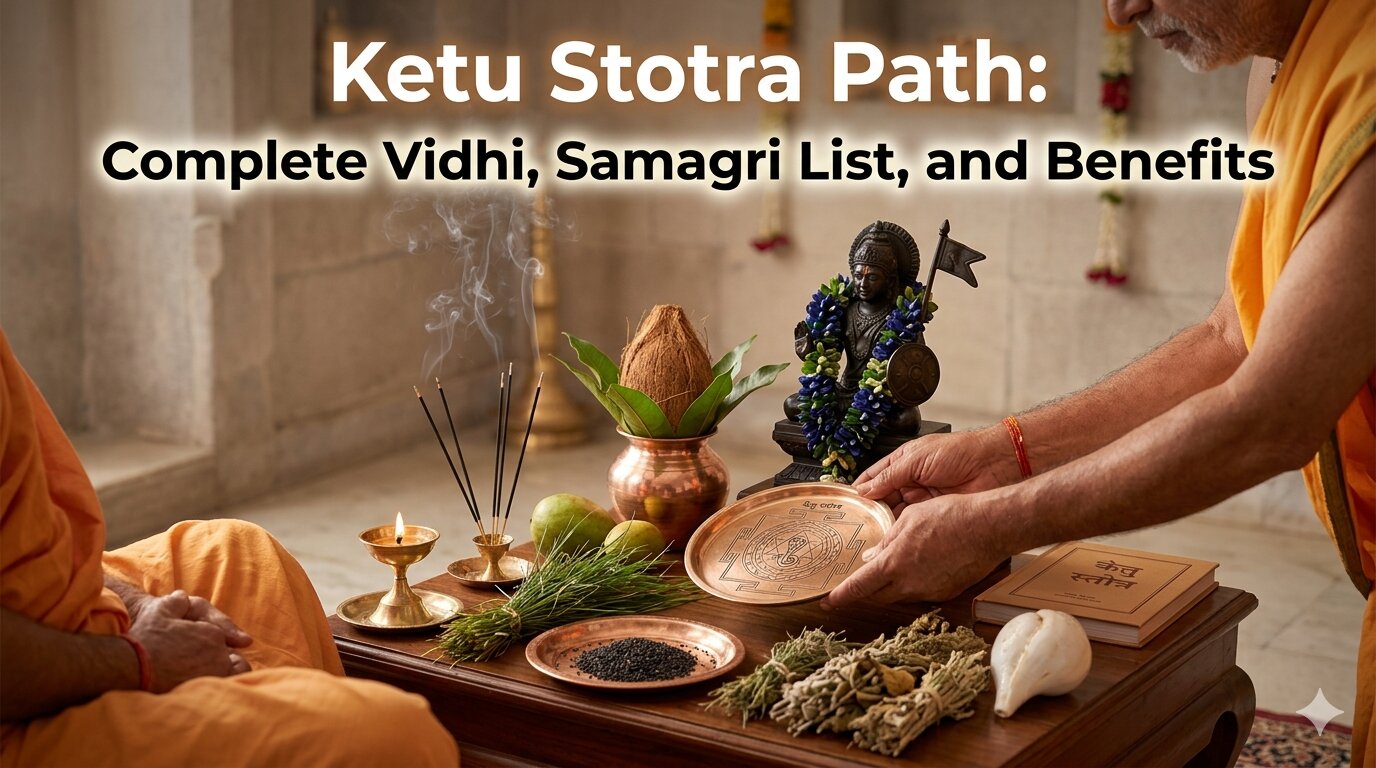
Murti ya Yantra: Ketu yantra engraved on iron plate or image of Ganesha (Ketu's presiding deity)
Phool (Flowers): Multicolored flowers, kusha grass, datura flowers (if available), dried flowers
Dhoop aur Agarbatti: Loban (frankincense), guggul dhoop, or earth-scented incense sticks
Diya (Lamp): Iron or earthen lamp with sesame oil (til ka tel) or mustard oil
Naivedya: Khichdi made with moong dal and rice, sesame laddoos, or simple cooked food without onion-garlic
Kapda ka Rang: Smoke grey, brown, multicolored, or black cloth (natural fabrics preferred)
Vishesh Samagri: Black sesame seeds (kale til), kusha grass, iron nail, blanket for donation, whole urad dal, blue flag flower (if available), camphor, gangajal, raw milk, smoke-colored beads
Step 1: Taiyaari (Preparation/Shuddhi) Bathe early morning and wear clean clothes in grey, brown, or multicolored. Clean the puja space and spread a dark-colored asana. Sprinkle gangajal around the area. Keep mind calm and detached- Ketu favors vairagya bhava.
Step 2: Sankalp (Intention Setting) Sit facing South-West direction (Ketu's direction). Hold akshat (rice mixed with turmeric) and water in right palm. Clearly state: "Aham [your name] Ketu graha shanti artham, Stotra Path karma kariye." Release the akshat and water into a kalash or plate.
Step 3: Avahana (Invocation) Light the sesame oil lamp and incense. Invoke Lord Ganesha first as Ketu's ruling deity. Then invite Ketu's presence: "Om Ketave Namah, Aagaccha Aagaccha, Sthapaya Sthapaya." Visualize Ketu as a headless torso holding mace and sword, seated on vulture.
Step 4: Shodashopachara or Panchopachar Puja Offer kusha grass, multicolored flowers, sesame seeds, and incense to Ketu yantra or image. Apply smoke-colored tilak if you have grey ash or vibhuti mixed with kumkum. For Stotra Path specifically, keep mind focused on liberation and surrender.
Step 5: Mukhya Bhog (Main Offering) Offer khichdi or sesame laddoos on iron or clay plate. Sprinkle gangajal three times. Say: "Om Ketave Namah, Idam Naivedyam Samarpayami." Also offer raw blanket, iron items, or black cloth as symbolic dakshina to the deity.
Step 6: Stotra Path (Recitation) Recite Ketu Stotra, Ketu Kavacham, or relevant Navagraha Stotra verses. Read with clear pronunciation from printed text. Complete recitation 1, 3, or 7 times based on time available. If doing only mantra, chant 108 times with rudraksha mala.
Step 7: Mantra Jaap After Stotra, perform concentrated mantra jaap (details in next section). Maintain mental focus on Ketu's form and your spiritual goal. Use left hand mala or iron ring if preferred for Ketu sadhana.
Step 8: Aarti aur Samapti (Closing) Perform aarti with camphor or ghee lamp. Ring bell and offer pushpanjali (flower offering). Bow in complete surrender: "Om Ketu Devaya Namah." Do three pradakshinas mentally or physically if space permits.
Step 9: Prasad Vitran Distribute prasad to family members and offer portion to crow, dog, or keep aside for donation. Donate blanket, iron items, or sesame to needy person or temple on same day if possible.
1. Beej Mantra: "Om Straam Streem Straum Sah Ketave Namaha" Chant 108 times daily or 17,000 times over 40 days for major results.
2. Vedic Mantra (Navagraha Stotra): "Palasha Pushpa Sankasham Taraka Graha Mastakam | Raudram Raudratmakam Ghoram Tam Ketum Pranamamy Aham ||"
Meaning: I bow to Ketu who resembles palasha flower, is head of stars and planets, fierce and of terrible form.
3. Saral Mantra (Simple): "Om Ketave Namaha" Perfect for beginners- chant 108 times daily.
Best Practice: Recite during Ketu hora on Tuesday or Saturday. Use rudraksha mala or iron beads. Sit in padmasana or sukhasana with spine straight, focusing on agya chakra (third eye).
Are you currently struggling with life phases like Astrology? Discover your precise chart insights now.
Sabse Shubh Din (Best Day): Tuesday (Mangalvar) is most auspicious as Mars, Ketu's friend, rules this day. Saturday (Shanivar) also excellent as both are shadow planets and natural allies. During Ketu Mahadasha, performing on Tuesdays brings maximum benefits.
Shubh Nakshatra: Ashwini, Magha, and Moola nakshatras (all ruled by Ketu) are most powerful. Ardra and Swati also favorable.
Tithi: Krishna Paksha (waning moon) Ashtami or Chaturdashi particularly effective for Ketu worship. Amavasya (new moon) also highly auspicious for shadow planet propitiation.
Samay (Time of Day): Sunrise (suryoday) or during Rahu-Ketu kaal (specific planetary hour). Evening sandhya kaal (twilight) also suitable. Calculate Ketu hora using planetary hour calculator for precision.
Kab Na Karein (Avoid): During solar or lunar eclipse unless under expert guidance. Avoid Sundays as Sun is Ketu's enemy. Don't perform during Bhadra kaal or when feeling extremely negative emotions.
Q1: What is the difference between Ketu puja and Ketu Stotra Path?
A1: Ketu puja involves complete ritualistic worship with abhishekam, elaborate offerings, and often requires priest assistance. Stotra Path focuses specifically on sacred text recitation- simpler, meditation-oriented, and easily performed at home. Stotra Path emphasizes devotional reading and mantra power rather than material offerings. Both are effective; choose based on your capability and time.
Q2: Ketu ki puja ghar par akele kar sakte hain ya pandit chahiye?
A2: Ketu ki Stotra Path aap ghar par akele bhi kar sakte hain. Shudh mann aur bhakti bhav sabse zaroori hai. Agar pehli baar kar rahe hain toh ek baar pandit se seekh lein, phir regular khud kar sakte hain. Major puja ya havan ke liye pandit ki salah le lena better hota hai.
Q3: How long does it take to see results from Ketu Stotra Path?
A3: Spiritual remedies work on karmic time, not clock time. Sincere practitioners often notice subtle changes within 40 days- increased intuition, reduced confusion, or unexpected solutions appearing. For deep-rooted karmic issues, continue for 90 days or one full Ketu cycle. Mental peace and clarity often manifest before material results. Consistency matters more than intensity.
Q4: Ketu ki puja mein kya nahi karna chahiye?
A4: Laal rang ke phool ya vastra bilkul avoid karein- yeh Sun aur Mars ke colors hain jo Ketu ke dushman hain. Puja mein bahut zyada material offerings ka dikhawa na karein; Ketu vairagya pasand karta hai. Sweet-smelling expensive attar ki jagah loban ya guggul use karein. Ego ya show-off bhav se puja karne se Ketu naraz ho sakta hai.
Q5: Can women perform Ketu Stotra Path during menstruation?
A5: Classical texts have varying opinions. Ketu, being a moksha karaka and beyond bodily identifications, is generally more flexible. However, many traditions suggest avoiding temple visits or deity murti puja during periods. Mental japa and Stotra Path reading without touching puja items is usually acceptable. Listen to your family tradition and personal comfort. Devotion in heart matters most to Ketu.