Quick Answer: How Do I Perform Navratri Puja at Home for All 9 Days?
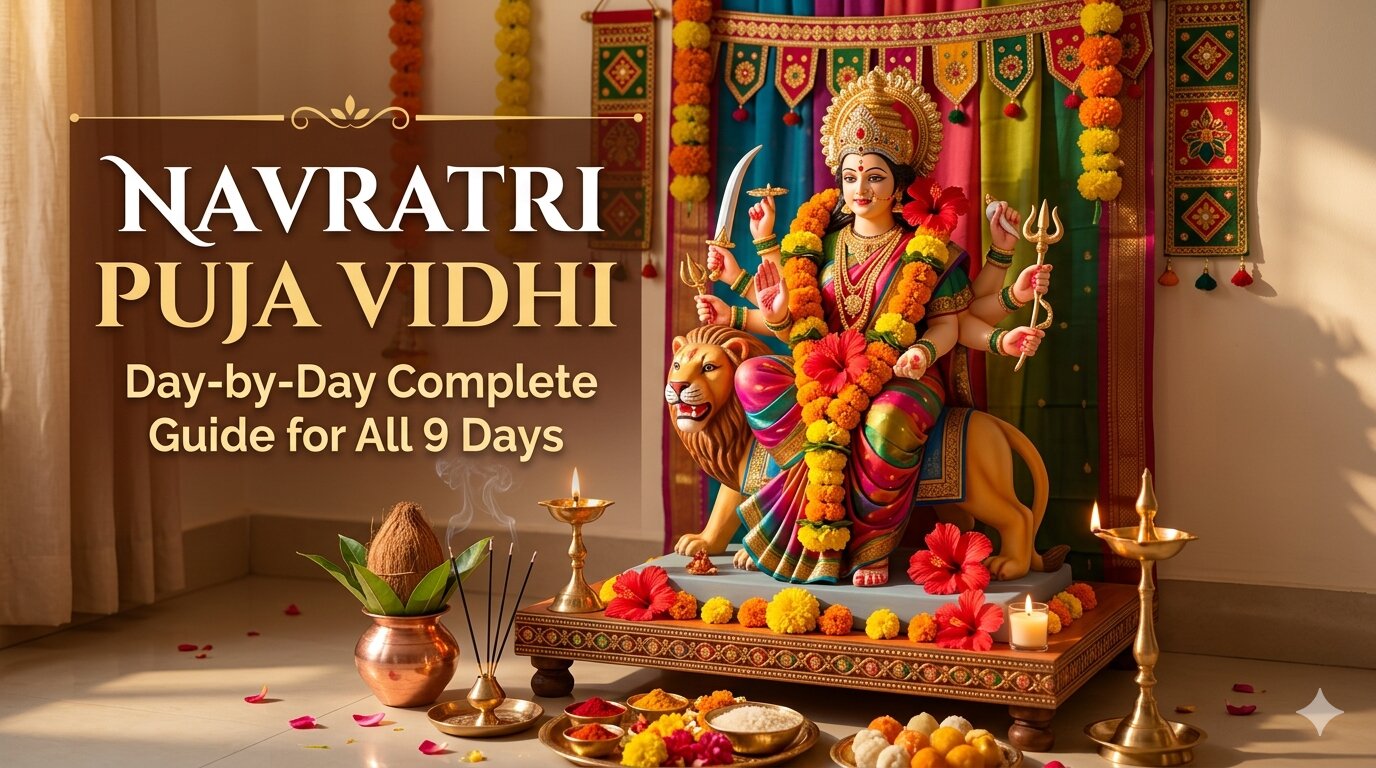
How do I perform Navratri Puja at home for all 9 days? Navratri Puja at home begins with Ghatasthapana (Kalash Sthapana) on Day 1 - the installation of a sacred clay pot to invoke the Goddess's presence for the entire nine days. Each of the nine days is then dedicated to one of the nine forms of Maa Durga (Navadurga), with a specific colour to wear, a specific mantra to chant, and a specific offering (Bhog) to make. The daily puja sequence includes: bathing and wearing the day's colour, lighting a ghee lamp, offering flowers and Bhog, chanting the day's mantra 108 times, reading a portion of the Durga Saptashati, and performing aarti. Day 8 (Ashtami) and Day 9 (Navami) include the special Havan (fire ritual) and Kanya Puja (worship of young girls as manifestations of the Goddess). Chaitra Navratri 2026 runs from March 19 to March 27.
Ghar par 9 din Navratri Puja kaise karein - step by step vidhi: Navratri Puja ki shuruaat Ghatasthapana se hoti hai - pehle din ek mitti ka kalash sthaapit karke usme Maa Durga ka aahvaan kiya jaata hai. Phir har din ek vishesh devi ki pooja hoti hai - uss devi ka rang pehanna, ghee diya jalana, phool aur bhog arpan karna, us din ka mantra 108 baar japna, Durga Saptashati ka paath karna, aur aarti karna. Ashtami (Diwas 8) aur Navami (Diwas 9) par Havan aur Kanya Puja ki jaati hai - yahi navratri ka sabse mahattwapoorn anushthan hai. Chaitra Navratri 2026: 19 March se 27 March tak. |
Navratri - Nav (nine) + Ratri (nights) - is one of the most sacred and widely observed festivals in the Hindu calendar. Celebrated four times a year in different traditions, the two most significant are Chaitra Navratri (March–April, beginning of the Hindu New Year) and Sharada Navratri (September–October, the most widely celebrated). During all nine days, devotees worship the Navadurga - the nine divine forms of Maa Shakti - with specific rituals, mantras, offerings, and fasting.
Navratri is not merely a festival of devotional fervour. In the Tantric and Shakta traditions, these nine days represent a window of heightened divine receptivity - a period when the Goddess's energy is maximally accessible for worship, spiritual practice, and the resolution of personal karma. The Durga Saptashati (700 verses in praise of the Goddess, from the Markandeya Purana) is the central scripture of Navratri and contains within it the complete theology of the nine-day worship.
This guide provides the complete, step-by-step Navratri Puja Vidhi for all 9 days - including the goddess for each day, the correct colour, the specific mantra, the prescribed Bhog (food offering), and the procedures for Ghatasthapana, Havan, and Kanya Puja - alongside the Chaitra Navratri 2026 dates (March 19–27).
| Day | Date (2026) | Goddess | Colour |
| Day 1 - Pratipada | Thursday, March 19 | Maa Shailaputri | Yellow |
| Day 2 - Dwitiya | Friday, March 20 | Maa Brahmacharini | Green |
| Day 3 - Tritiya | Saturday, March 21 | Maa Chandraghanta | Grey |
| Day 4 - Chaturthi | Sunday, March 22 | Maa Kushmanda | Orange |
| Day 5 - Panchami | Monday, March 23 | Maa Skandamata | White |
| Day 6 - Shashthi | Tuesday, March 24 | Maa Katyayani | Red |
| Day 7 - Saptami | Wednesday, March 25 | Maa Kalaratri | Royal Blue |
| Day 8 - Ashtami | Thursday, March 26 | Maa Mahagauri + Havan + Kanya Puja | Pink |
| Day 9 - Navami | Friday, March 27 | Maa Siddhidatri + Navami Puja + Parana | Purple |
Chaitra Navratri 2026 Muhurta Details: Ghatasthapana Muhurta: 06:52 AM to 07:43 AM, March 19, 2026 (best window - approximately 51 minutes) Abhijit Muhurta (alternate): 12:05 PM to 12:53 PM, March 19, 2026 Ashtami Sandhi Puja Window: 11:24 AM to 12:12 PM, March 26, 2026 (48-minute sacred junction between Ashtami and Navami) Navami Tithi ends / Parana time: After 10:06 AM, March 27, 2026 - fast may be broken after this time Ram Navami (Day 9): March 27, 2026 - the 9th day of Chaitra Navratri coincides with Ram Navami, the birth anniversary of Lord Rama
Sharad Navratri 2026: Sharad Navratri (the larger autumn festival) will fall in October 2026 - exact dates to be confirmed via the Panchang. The puja vidhi described in this article applies identically to both Navratris. |
Stock all samagri (ritual materials) before the festival begins. Running out of materials mid-festival breaks the continuity of the puja. The list below is divided into permanent items (used throughout all 9 days) and day-specific items.
| Item | Quantity / Notes |
| Maa Durga murti or framed image (Navdurga) | 1 - or a Durga Saptashati book with Goddess image |
| Copper or clay Kalash (pot) for Ghatasthapana | 1 - new, unfired clay kalash preferred |
| Mango leaves (Aam ke patte) | 9–11 leaves for Kalash; fresh bundle for daily decoration |
| Coconut (Nariyal) | 1 for Kalash, extras for daily offerings |
| Seven sacred grains (Saptadhanya) | Barley (jau), sesame (til), paddy, moong, Kangni, wheat, and one other - for Kalash bed |
| Red cloth (Lal chunni / dupatta) | 1 large piece for Kalash and Mata chowki |
| Ghee lamps (Diyas) | 2 minimum - large lamp for altar, small for daily puja |
| Pure cow's ghee | 500g+ - for lamps and havan |
| Camphor (Kapoor) | For daily aarti |
| Incense sticks (Agarbatti) | Sandalwood, rose, or jasmine - 9 packs |
| Flower garlands and loose flowers | Marigold (genda) - most traditional; supplemented with other fresh flowers daily |
| Kumkum (vermilion) | For tilak and Kalash decoration |
| Akshat (whole unbroken rice) | 500g - for daily offerings |
| Gangajal (Ganges water) or clean water | For Kalash and daily sprinkling |
| Roli (red sandalwood powder) | For tilak and offerings |
| Chandan (sandalwood paste) | For Devi tilak daily |
| Durga Saptashati book | For daily Paath (reading) |
| Navratri Vrat Katha or Navdurga Stotra book | Optional but recommended |
| Havan Kund (fire pit) | 1 - for Ashtami Havan; copper or clay |
| Havan Samagri (havan herbs) | 1 packet for Ashtami Havan - available at temple supply shops |
| Mango wood pieces (Aam ki lakdi) | For Havan fire - approximately 1 kg |
| Fruits (seasonal) | For daily Bhog - bananas, apples, coconut, pomegranate |
| Day | Goddess | Prescribed Bhog |
| Day 1 | Shailaputri | Pure ghee (in a small bowl); cow's milk; white sweets |
| Day 2 | Brahmacharini | Sugar (mishri), jaggery, and fresh fruits - no elaborate sweets |
| Day 3 | Chandraghanta | Milk-based sweet - kheer or rabri |
| Day 4 | Kushmanda | Malpua (sweet pancake) or halwa |
| Day 5 | Skandamata | Banana (kela) - banana is specifically associated with this form |
| Day 6 | Katyayani | Honey (shahad) - a small bowl of pure honey |
| Day 7 | Kalaratri | Jaggery (gur) - raw jaggery or gur sweets |
| Day 8 | Mahagauri | Coconut (nariyal) and panchphal (five fruits) |
| Day 9 | Siddhidatri | Sesame seeds (til) and kheer (rice pudding); also the Navami Havan prasad |
Goddess Profile: Maa Shailaputri (Shaila = mountain; Putri = daughter) is the daughter of the Himalayas - Goddess Parvati in her mountain-born form. She rides Nandi (the bull), holds a Trishul in her right hand and a lotus in her left. She governs the Muladhara Chakra (root chakra) and represents the foundational strength, stability, and rootedness that the entire Navratri journey rests upon.
Mantra: ओम् देवी शैलपुत्र्यै नमः।।
Om Devi Shailaputryai Namah || (Chant 108 times)
Ghatasthapana (also called Kalash Sthapana) is the most important ritual of the entire Navratri - it formally invites the Goddess's presence into your home for all nine days. Perform it during the prescribed Muhurta: 6:52 AM to 7:43 AM on March 19, 2026. Alternatively, during Abhijit Muhurta: 12:05 PM to 12:53 PM.
Kalash Sthapana Mantra: Om Kalashe Devi Avahayami | Maa Durge Atra Avatara | Navratri Poojam Grihana | (Or simply chant: Om Jayanti Mangala Kali Bhadrakali Kapalini | Durga Kshama Shiva Dhhatri Svaha Svadha Namostute ||) |
Day 1 Specific Offering: Pure cow's ghee - offer a small bowl of ghee to the lamp and place a few drops before the image. It is believed that offering ghee to Maa Shailaputri on this day ensures good health for the entire year.
Goddess Profile: Maa Brahmacharini (Brahma = austerity/knowledge; Charini = one who follows) is the ascetic form of Goddess Parvati - the form she took during her thousands of years of penance to win Lord Shiva as her consort. Depicted walking barefoot, holding a Japa Mala (rosary) in her right hand and a Kamandalu (water pot) in her left, she embodies unwavering devotion, self-discipline, and the power of tapasya. She governs the Swadhisthana Chakra.
Mantra: ओम् देवी ब्रह्मचारिण्यै नमः।।
Om Devi Brahmacharinyai Namah || (Chant 108 times)
Bhog: Sugar (mishri), jaggery, and fresh fruits - simple sattvic offerings representing purity and austerity in alignment with the Goddess's own ascetic nature.
Colour significance: Green represents growth, renewal, and harmony - aligned with Maa Brahmacharini's power to create new spiritual pathways through discipline.
Goddess Profile: Maa Chandraghanta (Chandra = moon; Ghanta = bell) is the married form of Goddess Parvati who bears a half-moon shaped like a bell on her forehead. She rides a tiger and has ten arms, each holding weapons including trishul, gada, sword, and a bow-and-arrow - with one hand in Abhaya Mudra (gesture of protection) and another in Varada Mudra (gesture of blessings). Her bell is said to drive away evil forces. She governs the Manipura Chakra and bestows courage, fearlessness, and inner peace.
Mantra: ओम् देवी चन्द्रघण्टायै नमः।।
Om Devi Chandraghantayai Namah || (Chant 108 times)
Bhog: Kheer (rice pudding with milk and sugar) or Rabri - milk-based sweets that honour the moon-associated energy of this form.
Colour significance: Grey signifies calmness and stability - the Goddess's ability to maintain peace even while fully armed for battle.
Goddess Profile: Maa Kushmanda (Ku = little; Ushma = warmth/energy; Anda = cosmic egg) is the creator goddess - she created the universe with her divine smile when there was nothing but void. She is depicted with eight arms (Ashtabhuja) and rides a lion. She holds various weapons and a jar of Amrita (nectar of immortality). She resides in the solar system and governs the Anahata Chakra (heart chakra). Her worship brings creativity, vitality, and cosmic energy.
Mantra: ओम् देवी कूष्माण्डायै नमः।।
Om Devi Kushmandayai Namah || (Chant 108 times)
Bhog: Malpua (sweet pancakes fried in ghee) or Halwa - energy-rich sweets aligned with the Goddess's solar, creativity-generating nature.
Colour significance: Orange reflects enthusiasm, creativity, and the life-giving warmth of the sun with which Maa Kushmanda is directly associated.
Goddess Profile: Maa Skandamata (Skanda = Lord Kartikeya/Murugan, the god of war; Mata = mother) is the mother of Lord Skanda/Kartikeya. She is depicted seated on a lotus, holding infant Kartikeya in her lap, with four arms carrying a lotus and Kartikeya in two hands and the other two in Abhaya and Varada Mudras. She rides a lion and is white-complexioned - radiating motherly love, protective energy, and grace. She governs the Vishuddha Chakra (throat chakra).
Mantra: ओम् देवी स्कन्दमातायै नमः।।
Om Devi Skandamatayai Namah || (Chant 108 times)
Bhog: Banana (kela) - specifically associated with Maa Skandamata in the classical Navratri tradition. Offer a bunch of fresh bananas.
Colour significance: White represents purity, serenity, and the perfect love of a mother - Skandamata's primary attribute.
Goddess Profile: Maa Katyayani is the fierce warrior form of the Goddess who was born as the daughter of the sage Katyayana (hence her name). She arose from the combined energies of Brahma, Vishnu, and Shiva specifically to slay the demon Mahishasura. Mounted on a lion, she has four arms - her right hands in Abhaya Mudra and holding a sword; her left hands holding a lotus and a weapon. She represents fierce justice, warrior courage, and the power to overcome all enemies. She governs the Ajna Chakra (third eye) and is associated with the planet Mars/Mangal - making this day particularly significant for those seeking [Mangal Dosh remedies (/mangal-dosh-remedies)].
Mantra: ओम् देवी कात्यायन्यै नमः।।
Om Devi Katyayanyai Namah || (Chant 108 times)
Bhog: Honey (shahad) - pure raw honey offered in a small clay or silver bowl. It is specifically associated with Maa Katyayani and is said to enhance her protective, victory-granting energy.
Colour significance: Red signifies power, courage, and fierce protective energy - perfectly aligned with Maa Katyayani's warrior nature.
| Note on Marriage Prayers: Maa Katyayani is also specifically invoked by unmarried women seeking a good husband. In the Bhagavata Purana, the Gopis of Vrindavan observed the Katyayani vrat throughout the month of Margashirsha to seek Lord Krishna as their consort. On this day, special prayers from unmarried devotees are considered particularly efficacious. |
Are you currently struggling with life phases like Spirituality? Discover your precise chart insights now.
Goddess Profile: Maa Kalaratri (Kala = time/death; Ratri = night) is the most fearsome form of Maa Durga - dark-complexioned, with three eyes, and flowing black hair. She rides a donkey, holds a sword and a hook (Vajra) in her hands, with the other two in Abhaya and Varada Mudras. Flames emerge from her nostrils and her neck bears a lightning-like garland. Despite her terrifying appearance, she is Shubhankari - the auspicious one, the destroyer of ignorance and darkness - and specifically protects her devotees from all negative forces, black magic, and evil spirits.
Mantra: ओम् देवी कालरात्र्यै नमः।।
Om Devi Kalaratriyai Namah || (Chant 108 times)
Bhog: Jaggery (gur) - raw jaggery or jaggery-based sweets. The dark, earthy sweetness of jaggery corresponds to Maa Kalaratri's deep, transformative nature.
Colour significance: Royal Blue represents cosmic depth, divine energy, and the infinite darkness that precedes creation - the realm of Maa Kalaratri.
Special puja note: This is considered the most auspicious day for Baglamukhi Yantra puja and all protective Tantric rituals - see [Baglamukhi Yantra: Meaning, Benefits and How to Use for Protection (/baglamukhi-yantra)].
Goddess Profile: Maa Mahagauri (Maha = great; Gauri = fair/radiant) is the form of the Goddess after her severe penance - having emerged cleansed and luminously white from years of tapasya. She rides a white bull, has four arms holding a trishul and a damaru, with the other two in Abhaya and Varada Mudras. She radiates pure spiritual light, removes all past karma, and bestows complete inner purification. She governs the Sahasrara Chakra (crown chakra).
Mantra: ओम् देवी महागौर्यै नमः।।
Om Devi Mahagauryai Namah || (Chant 108 times)
Bhog: Coconut (nariyal) and Panchphal (five fruits) - the white coconut mirrors the Goddess's radiant purity.
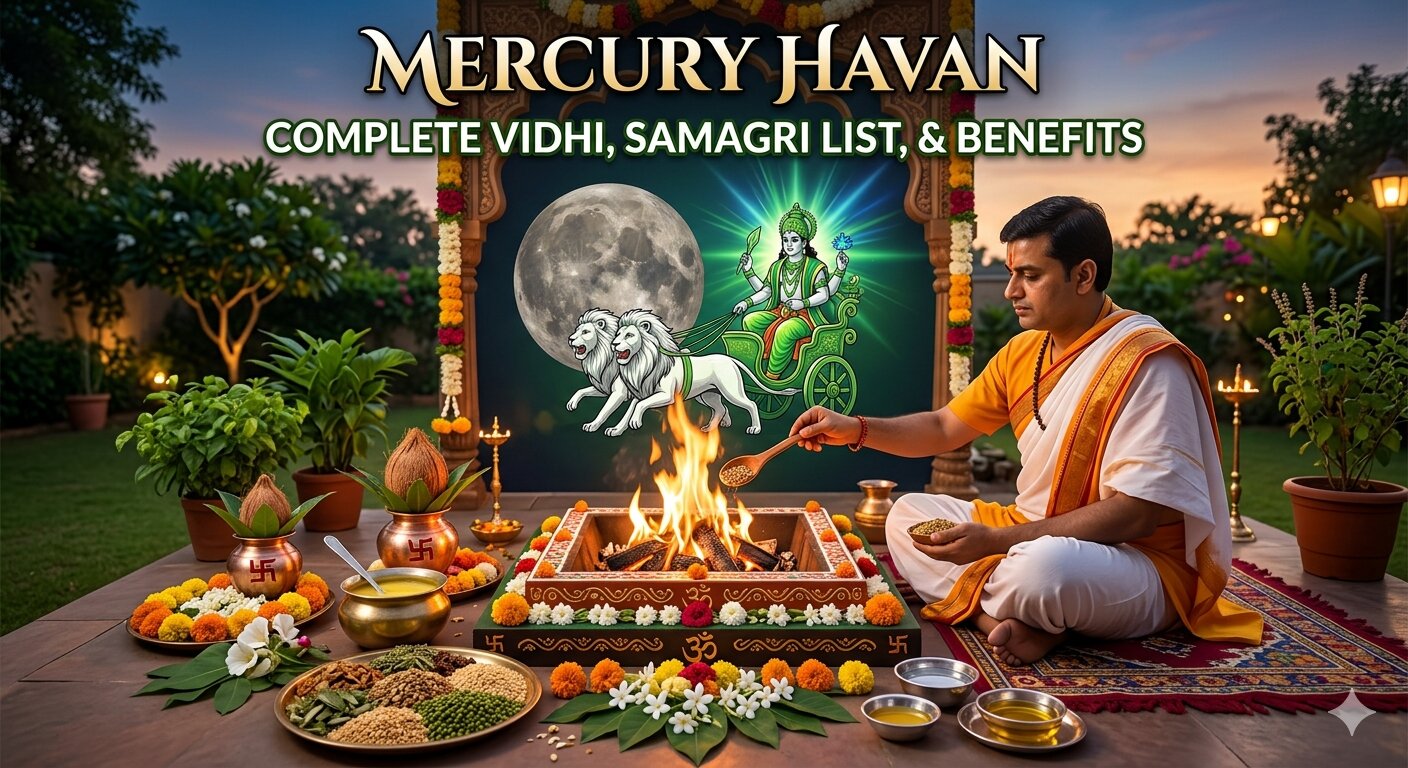
The Havan on Ashtami is one of the most powerful rituals of the entire Navratri. Perform it during or after the Sandhi Puja window: 11:24 AM to 12:12 PM on March 26, 2026 - the sacred 48-minute junction between Ashtami and Navami tithis, when Goddess Chamunda is said to have appeared to slay the demons Chanda and Munda.
Havan Ahuti Mantra: Om Aim Hreem Kleem Chamundaye Vichche Swaha (principal Havan mantra - chant with each Ahuti) Om Hreem Durga Durgaye Namah Swaha (secondary Ahuti mantra) Perform a minimum of 108 Ahutis. For a family havan, each family member may contribute Ahutis while the principal worshipper leads the chanting.
Sandhi Puja: During the Sandhi window (11:24 AM–12:12 PM), perform 9 specific Ahutis of pure ghee while chanting Om Chamundaye Vichche Swaha - one for each Navdurga. This is the most auspicious moment of the entire Navratri. |
Kanya Puja is the most human and heartfelt ritual of Navratri - the formal worship of young girls (typically aged 2 to 10 years) as living embodiments of the nine forms of the Goddess. This ritual is performed on Ashtami and/or Navami.
Goddess Profile: Maa Siddhidatri (Siddhi = supernatural attainment/perfection; Datri = giver) is the ninth and final form - the Goddess who grants all eight siddhis: Anima, Mahima, Garima, Laghima, Prapti, Prakamya, Isitva, and Vasitva. She sits on a lotus, holds a mace, conch, chakra, and lotus in her four hands. She represents the completion of the spiritual journey - the state where the devotee has integrated all nine aspects of the Goddess and stands ready for liberation. In the Shiva Purana, Lord Shiva himself attained his Ardhanarishvara form (half-Shiva, half-Parvati) through the grace of Maa Siddhidatri.
Mantra: ओम् देवी सिद्धिदात्र्यै नमः।।
Om Devi Siddhidatryai Namah || (Chant 108 times)
Bhog: Sesame seeds (til) offered with a small portion of kheer - sesame represents the removal of all obstacles and the fulfilment of all intentions, appropriate for the culminating day.
Ram Navami Mantra (chant on Day 9 of Chaitra Navratri): Om Sri Ramaya Namah || (108 times) Ram Janm Muhurta on March 27, 2026: 11:13 AM to 1:41 PM - a particularly auspicious window for Ram Navami puja on this day |
The following routine applies to all nine days. Adjust for your schedule - the morning puja is essential; afternoon and evening elements may be combined if needed.
| Time | Practice |
| Brahma Muhurta / Sunrise (approx. 5–7 AM) | Bathe and wear the day's colour. Light the Kalash lamp and ghee diya at the altar. |
| Morning Puja (7–8 AM) | Offer flowers and the day's Bhog to the Goddess. Apply kumkum tilak to the murti/image. Sprinkle Gangajal. |
| Mantra Jap (8–8:30 AM) | Chant the day's specific Navdurga mantra 108 times using a rudraksha or crystal mala. |
| Durga Saptashati Paath (8:30–9:30 AM) | Read one Charitra per day across the nine days (Prathama Charitra = Days 1-2; Madhyama = Days 3-5; Uttara = Days 6-9). Even a portion daily is meritorious. |
| Morning Aarti (after Paath) | Perform aarti with camphor and ghee lamp. Ring a bell (ghanta) if available. |
| Afternoon (optional, if possible) | Light the diya and incense. Offer a small portion of water or fruits. Brief mantra chanting (11 repetitions minimum). |
| Evening Aarti (sunset) | The most important evening practice - light the ghee diya and camphor, perform aarti, and chant the Navdurga mantra for the day. This is when the Goddess is particularly receptive. |
| Night (before sleep) | Ensure the Kalash lamp is safely lit or extinguished safely if unattended. Leave flowers and water at the altar. |
Yes. Fasting is a powerful support to the spiritual practices of Navratri, but it is not mandatory. The core of Navratri is devotional worship - the daily puja, mantra chanting, and Durga Saptashati reading. Those with medical conditions, children, pregnant women, and the elderly are specifically exempt from strict fasting in the classical tradition. A partial fast (avoiding grains, onion, garlic, and non-vegetarian food) is always an acceptable middle path.
Yes - Ghatasthapana is the formal beginning of the nine-day puja and should be performed even in its simplest form. At minimum: fill a clean copper or clay pot with water, place five mango leaves and a coconut on top, apply a kumkum tilak, and offer a flower and diya while invoking the Goddess. This simple Kalash Sthapana is sufficient for home practitioners and formally opens the nine-day puja cycle.
A complete Saptashati reading over nine days (one Charitra per sitting) is ideal. If this is not possible, even reading a few shlokas (verses) from each Charitra or listening to a recorded recitation daily is meritorious. The most accessible approach for busy practitioners is: read the Kavach (armour prayer), Argala, and Keelakam (three preliminary prayers) daily, and the day's specific Navdurga Dhyana shloka before the mantra chanting.
The classical tradition does not penalise genuine disruptions. If a day is missed due to illness, travel, or an unavoidable circumstance, resume the following day without anxiety. The Goddess understands sincere intent - make a brief prayer of explanation and continue. Do not attempt to 'make up' missed days by doubling the next day's practice; simply continue with the regular schedule.
Absolutely. Navratri worship is for all devotees regardless of gender. Men may fast, perform puja, chant mantras, and conduct Kanya Puja. Men participate in Kanya Puja by touching the Kanyas' feet and offering prasad - the ritual is identical. Men may also be part of the Havan as primary priest or as participant.
The Navdurga sequence (Shailaputri through Siddhidatri) is identical for both Navratris. However, the colours may differ between Chaitra and Sharad Navratri depending on which weekday the festival begins - the colour sequence is traditionally determined by the starting day of the week. Always confirm the colours for the specific year's festival from a current Panchang.
Related Spiritual Guides on Nakshatraai.ai: • [Baglamukhi Yantra: Meaning, Benefits and How to Use for Protection (/baglamukhi-yantra)] • [Mangal Dosh Remedies: 7 Proven Upay from Lal Kitab and Parashara (/mangal-dosh-remedies)] • [Kaal Sarp Dosh: Complete Guide, 12 Types, and Proven Remedies (/kaal-sarp-dosh)] • [How to Activate a Yantra at Home: Pran Pratishtha Vidhi (/how-to-activate-yantra)] • [Vastu Yantra: Benefits, Correct Placement and How to Use at Home (/vastu-yantra)] |
Navratri is the annual invitation to encounter the Goddess - not as a distant mythological figure, but as a living cosmic intelligence that manifests in nine distinct aspects, each addressing a different dimension of human experience. From Maa Shailaputri's mountain-rooted stability to Maa Siddhidatri's all-fulfilling grace, the nine days trace a complete arc: from groundedness to dissolution, from form to formlessness, from devotional effort to effortless being.
The Puja Vidhi in this guide - Ghatasthapana, daily mantra and Bhog, Ashtami Havan, and Kanya Puja - is the traditional structure through which generations of families have welcomed the Goddess into their homes and their lives. It does not require elaborate resources or specialist knowledge. It requires sincerity, continuity, and devotion
For Chaitra Navratri 2026 (March 19–27), begin your preparations before March 19 - gather the samagri, prepare the altar, and most importantly, prepare the mind. These nine days are a gift: nine opportunities to begin again, to purify, to connect, to transform. Jai Mata Di.
Connect with a Jyotishi on Nakshatraai.ai Generate your Kundali to understand which Navdurga form is most beneficial for your specific planetary configuration: nakshatraai.ai/add-kundli Speak with a qualified Jyotishi for personalised Navratri puja guidance, yantra recommendations, and astrological remedies: nakshatraai.ai/astrologer |
Disclaimer: This article is for educational and informational purposes only. Puja procedures, muhurta timings, and ritual specifications may vary by regional tradition, family custom, and sampradaya. The dates and timings given are based on the 2026 Panchang for India (IST). Devotees outside India should verify timings with a local Panchang. For the most precise muhurta for your specific location, consult a qualified Jyotishi or pandit.