19 Oct 2026 | By Dr. Sanjoy Atri | 10 min read The Demon in the Blood
There is a moment in the Durga Saptashati that has haunted physicians for generations. A demon named Raktabija strides onto the battlefield. Every time a weapon strikes him, every time a drop of his blood touches the earth, a new Raktabija rises from that drop—fully formed, equally powerful, equally relentless. The gods strike again. A hundred new demons rise. They strike a thousand times. A legion rises.
The gods are defeated not by a lack of power, but by a fundamental misunderstanding of the enemy. They are fighting a war of attrition against an adversary that thrives on attrition. Every blow they land is a gift to their enemy.
Then Kali arrives. She does not strike. She opens her mouth. She catches the blood before it can touch the ground. And in that moment, the demon is finally still.
For centuries, this was read as a tale of divine intervention—a story of good triumphing over evil through the intercession of the Mother. But in the operating theatres and oncology wards of the twenty-first century, a different reading emerges. A reading that is not merely poetic, but profoundly, unsettlingly scientific.
Raktabija is cancer.
And Kali’s strategy—the refusal to let the blood touch the earth—is the foundational principle of modern oncology.
The Cellular Cloning of Raktabija
The Durga Saptashati describes Raktabija’s boon with chilling precision: “From every drop of blood that falls from my body, a new warrior shall rise, equal in strength and valor.” In the language of modern cell biology, this is a description of metastasis and cancer stem cell (CSC) plasticity.
Cancer is not a single disease. It is a failure of cellular governance. In a healthy body, cells divide, differentiate, and die in accordance with a genetic program. When that program is corrupted, cells begin to divide without restraint. They ignore signals to stop. They evade the immune system. And crucially, they spread.
A 2026 review in Experimental & Molecular Medicine describes cancer stem cells as “tumor cell populations with self-renewal and tumor-propagating capacity” that drive “progression, therapeutic resistance and relapse through pronounced metabolic plasticity”. These are the cells that, like Raktabija, regenerate the tumor after treatment. They are the reason cancers recur. They are the reason a single surviving cell can seed a new tumor in a distant organ—the biological equivalent of a single drop of blood spawning a new demon.
The Saptashati’s description of the demon’s multiplication is not an exaggeration. It is a remarkably accurate metaphor for what oncologists call metastatic colonization. Tumor cells detach from the primary tumor, enter the bloodstream, and travel to distant sites. If they survive—if they find a permissive “soil” in a distant organ—they can establish a new colony. The “blood” of the primary tumor becomes the seed of the secondary tumor.
What the ancient text captured, modern science is only now fully mapping.
The Soil and the Seed
The Saptashati specifies that Raktabija’s power is activated when his blood touches the earth. This is not a minor detail. It is the key to understanding both the myth and the biology.
In 1889, the English surgeon Stephen Paget proposed the “seed and soil” hypothesis of metastasis. He argued that cancer cells (the “seeds”) do not spread randomly. They spread to organs that provide a favorable “soil”—a microenvironment that supports their growth. This hypothesis, initially dismissed, has been vindicated by decades of research.
The 2026 literature on cancer stem cells confirms that the tumor microenvironment is not a passive backdrop. It is an active participant in malignancy. A 2026 review in Signal Transduction and Targeted Therapy describes how CSCs “actively architect immunosuppressive” microenvironments, creating niches that protect them from immune attack and support their survival. The “earth” that Raktabija’s blood touches is not mere dirt. It is a complex ecosystem of immune cells, blood vessels, and structural proteins that has been co-opted by the tumor to serve its own ends.
This is why Kali’s strategy is so profound. She does not change the soil. She prevents the seed from reaching it. She intercepts the blood in mid-air, denying it the contact it needs to activate its regenerative power.
In clinical terms, this is the principle behind adjuvant therapy—treatment given after the primary tumor has been removed to eliminate microscopic residual disease before it can establish itself in distant organs. It is the principle behind sentinel lymph node biopsy, which detects the earliest spread of cancer cells. It is the principle behind circulating tumor cell (CTC) monitoring, which tracks the “drops of blood” that escape into the bloodstream.
Kali’s open mouth is the oncologist’s relentless vigilance.
The Immune System as Chamunda
But the myth does not end with Kali’s interception. The Saptashati describes the goddess Chamunda—a fierce aspect of Kali—who drinks the blood of Raktabija, consuming it entirely, ensuring that not a single drop reaches the earth.
This is the immune system.
The human body is not a passive host for cancer. It has a sophisticated surveillance system—T cells, natural killer (NK) cells, macrophages—designed to detect and destroy malignant cells. In most cases, this system works. It eliminates nascent tumors before they become clinically significant. It is only when the immune system fails—when cancer cells learn to evade or suppress it—that the disease progresses.
A 2026 study on metastatic triple-negative breast cancer revealed how tumors manipulate the immune system to protect themselves. Metastatic tumors drive the expansion of a specific type of neutrophil—CXCR2⁺ neutrophils—that suppresses T cell responses and promotes cancer stem cell plasticity. In other words, the tumor recruits immune cells and then re-educates them to serve as its bodyguards.
Chamunda’s consumption of the blood is the immune system’s elimination of cancer cells. When it works, the demon is destroyed. When it fails, the demon multiplies.
This is the rationale behind immunotherapy—the class of treatments that aim to restore and enhance the immune system’s ability to fight cancer. Immune checkpoint inhibitors, CAR-T cell therapy, and cancer vaccines all share a common goal: to empower Chamunda, to make the immune system capable of consuming the demon before it spreads.
The 2026 research on S100A9 ablation—disrupting the signaling pathway that metastatic tumors use to re-educate neutrophils—restored the immune system’s ability to respond to checkpoint inhibitors, “unlocking” the immune response. This is not just treatment. It is the re-awakening of Chamunda.
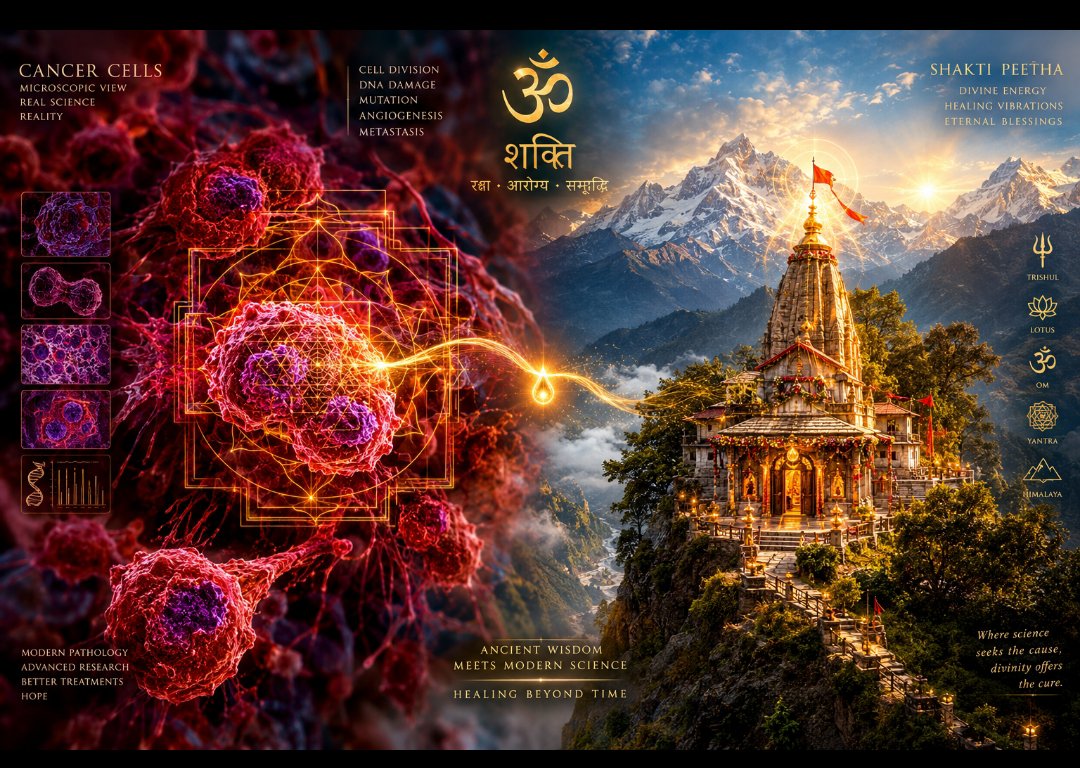
The 51 Shakti Peethas and the Geobiology of Healing
The Saptashati is not the only ancient text that speaks to modern medicine. The tradition of the 51 Shakti Peethas—the sacred sites where parts of the goddess Sati’s body are said to have fallen—offers a different kind of insight.
The conventional reading is devotional. These are places of pilgrimage, of worship, of connection with the divine feminine. But a growing body of research in geobiology and archaeoastronomy suggests that these sites may also have been chosen for reasons that are, in the broadest sense, medical.
A 2022 study on ancient monuments and geophysical anomalies found that “temples seem to be located on various geophysical anomalies and their properties conduct and amplify the resulting fields of these anomalies and this affect biology in human, animal and plant level”. The researchers invoked the concept of hormesis—the phenomenon by which low doses of a stressor (such as radiation or a magnetic field) can have beneficial effects, while high doses are harmful. They suggested that “temples might have been built for short term exposure of people to these amplified anomalies with the scope of healing”.
This is not to say that the Shakti Peethas are magic. It is to say that ancient builders may have possessed an intuitive understanding of the relationship between place, energy, and biology that modern science is only beginning to formalize. The 51 sites, distributed across the subcontinent in a pattern that some researchers describe as a “geomagnetic grid”, may have served as nodes in a vast, natural healing network—places where the Earth’s own energies were concentrated and made available to those who knew how to receive them.
For the modern physician, this is not a call to abandon evidence-based medicine. It is a reminder that health is not solely a matter of molecules and mechanisms. It is also a matter of environment, rhythm, and relationship—with the Earth, with the seasons, with the community. The Shakti Peethas are a physical reminder that healing has always been, in part, a matter of place.
The Rhythm of Regeneration
There is one more lesson from the Durga Puja tradition that speaks directly to the future of medicine: the lesson of rhythm.
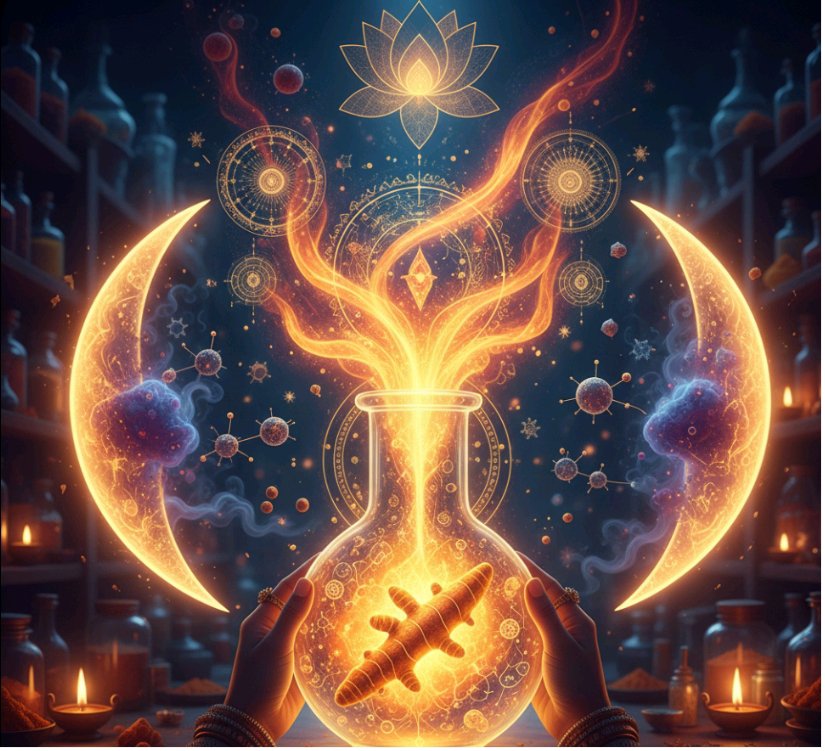
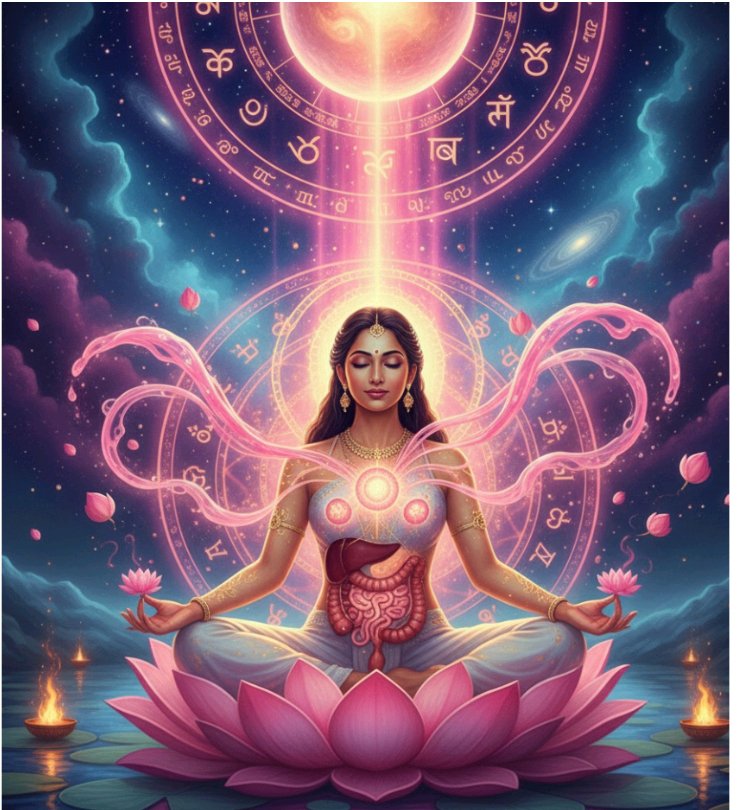
Navratri—the nine nights of Durga—is celebrated twice a year, at the junctions between seasons. In Ayurvedic terms, this is the period of Ritu Sandhi, the transition between seasons. A 2025 paper in the Journal of Ayurveda and Integrative Medicine notes that “Navratri occurs during equinoxes, times of heightened physiological vulnerability mirroring Ritu Sandhi in Ayurveda, when lifestyle adjustments are crucial”. During this period, the digestive fire (Agni) is naturally weaker, making the body more susceptible to imbalance.
The traditional practice of fasting during Navratri is not merely a religious observance. It is a sophisticated metabolic reset—a period of caloric restriction and dietary simplification that allows the body to adapt to the changing season. Modern research on intermittent fasting and caloric restriction has demonstrated profound effects on cellular repair, inflammation, and metabolic health. The ancient tradition anticipated this by millennia.
This is the regenerative principle: health is not a static state. It is a dynamic rhythm of activity and rest, consumption and detoxification, growth and pruning. The body is constantly regenerating itself—replacing old cells with new, clearing damaged proteins, repairing DNA. Cancer is a failure of this regenerative rhythm. It is a cell that has forgotten how to die.
The 2026 research on cancer stem cell plasticity reveals that these cells are masters of adaptation. They survive by changing their metabolism, evading the immune system, and entering dormant states. To defeat them, medicine must learn to restore the rhythm—to force the cancer cell out of its adaptive shell, to make it vulnerable again.
This is the future of oncology: not just killing cancer cells, but re-educating them. Reprogramming them to die. Restoring the rhythm of regeneration that the disease has disrupted.
The Physician as the New Rishi
The ancient seers who composed the Saptashati were not scientists in the modern sense. They did not have microscopes or flow cytometers. They did not know the molecular structure of DNA or the signaling pathways of the immune system.
But they were observers. They watched the world with extraordinary attention. They noticed patterns—in the seasons, in the body, in the relationship between the two. And they encoded those patterns in stories that have survived for millennia.
The story of Raktabija is not a scientific treatise. It is a heuristic—a mental model that captures a fundamental truth about the nature of malignancy. Cancer multiplies through its blood. It spreads through the soil. It is defeated not by force, but by interception and immune vigilance.
The story of the Shakti Peethas is not a geophysical survey. It is a map—a symbolic representation of the relationship between place and healing. It reminds us that health is not just biology. It is also geography, rhythm, and community.
The future of medicine lies not in abandoning these ancient insights, but in translating them. In taking the wisdom of the rishis and re-expressing it in the language of molecular biology, immunology, and regenerative medicine. In recognizing that the physician is, in a sense, a new kind of rishi—a seeker of patterns, a reader of signs, a servant of the healing force that animates all life.
On this Durga Puja, as the drums beat and the lamps are lit, let us remember the demon in the blood. Let us remember the goddess who caught the drops. And let us commit ourselves to the work of healing—not just with the tools of modern science, but with the wisdom of the ages.
The ancients called it Raktabija—the demon whose every drop of blood birthed a new warrior. Modern medicine calls it metastasis. On this Durga Puja, discover the hidden science of regeneration, immunity, and the sacred geography of healing
#RaktabijaCode
#RegenerativeMedicine
#CancerStemCells
#TumorImmunology
#ShaktiPeethaScience
#DurgaPuja2026
#AncientWisdomModernScience
#Geobiology
#DrSannjay
#FutureOfOncology